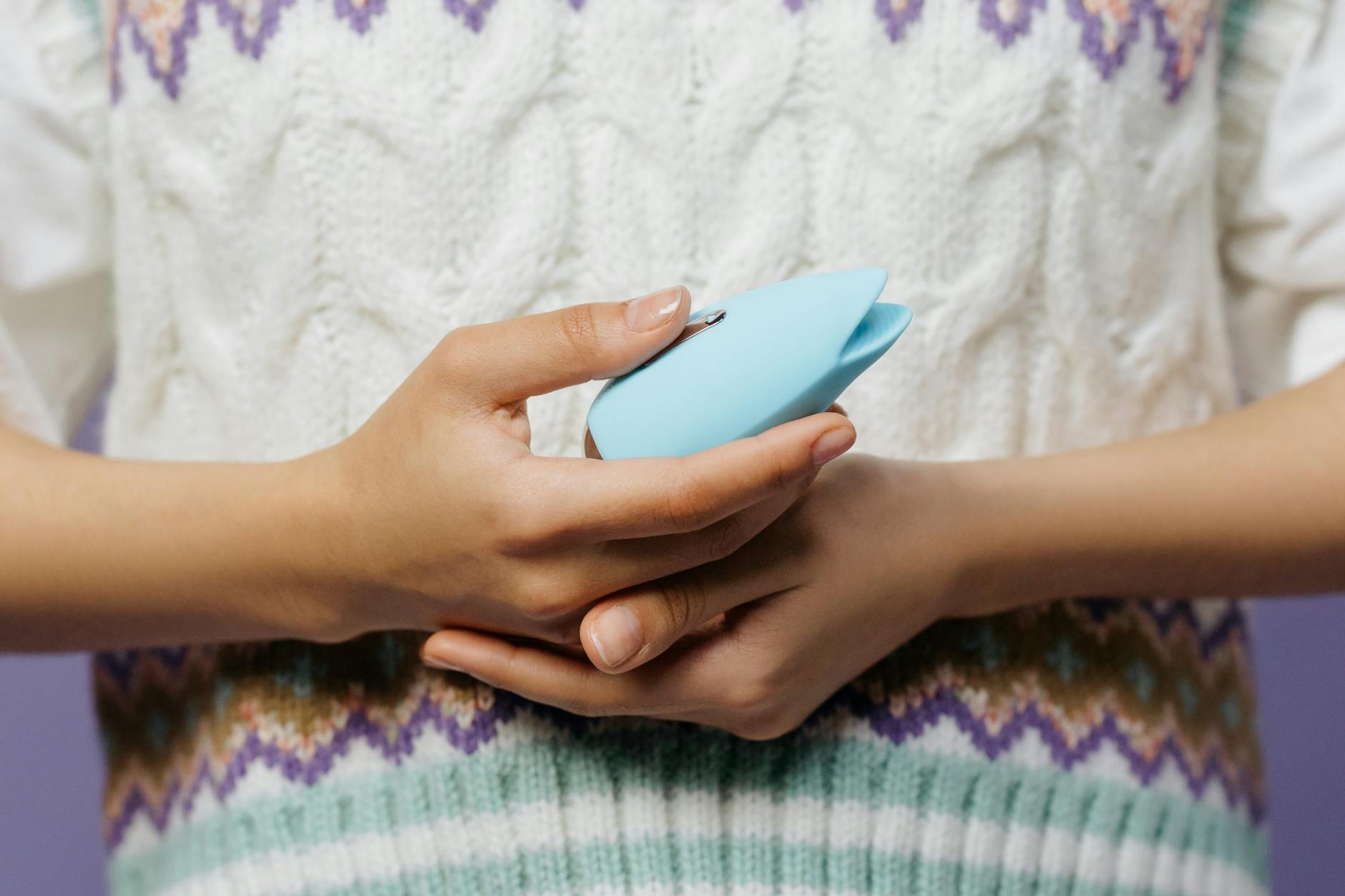
Here's what nobody tells you about arousal after 40
Arousal used to be fast. Maybe it still is sometimes. But more often now, it's... slower. You're not less interested. Your body isn't broken. The timeline just got longer. And if you're comparing yourself to how it felt at 25, you're measuring the wrong thing.
The good news: a slower arousal build isn't a bug. It's actually a feature that most people never discover because they're too busy feeling disappointed by it. A lemon vibrator, specifically, is designed to work with this new pace instead of fighting it.
Let me explain why that matters.
Why arousal actually slows down after 40
It's not one thing. It's three things happening at once.
Hormonal shifts. Testosterone starts declining in your 40s (yes, everyone with ovaries produces testosterone, and yes, it matters for desire). Estrogen fluctuates more unpredictably if you're in perimenopause or approaching menopause. These aren't deficiencies. They're transitions. Your nervous system is recalibrating.
Blood flow changes. The genital tissue has fewer estrogen receptors, which means blood pools more slowly in the vulva during arousal. This isn't permanent numbness. It's a slower inflation. Which means you need more time, not more pressure.
Cognitive load. This is the part doctors don't mention. After 40, you've got decades of life data. Relationship history, work stress, family obligations, past disappointments. Your brain is simultaneously more invested in pleasure and more crowded with competing thoughts. Both are true.
The combination feels like: "Why is this taking so long?" The answer is not that you're broken. It's that you're complex.
What a lemon vibrator does differently with slower arousal
Most vibrators are built for fast escalation. High power, aggressive patterns, designed to override the nervous system and force an orgasm. They work on younger bodies or bodies with faster arousal because they match the pace.
A lemon vibrator works differently. The suction mechanism means it's not relying on aggressive friction. It's creating sensation through gentle, sustained pressure and release. This matters because slower arousal often means you need consistency, not intensity.
Here's the practical difference: instead of waiting for your body to catch up to the vibrator's power, the lemon vibrator meets your body where it actually is and helps it build from there.
The three-phase approach that actually works
Forgot the old model where arousal was a straight line up. After 40, think of it as three distinct phases. A lemon vibrator changes how you move through each one.
Phase one: the long warm-up. Budget 15-25 minutes here. This is not wasted time. Use the Lem on the lowest setting, patterns 1 or 2. You're not trying to trigger anything yet. You're accumulating sensation. Let your brain quiet. Let blood pool gradually. Most people skip this phase and then wonder why the vibrator doesn't work. It's not the vibrator. You're starting from a cognitive place instead of a sensory one.
Phase two: the build. After 15 minutes, you'll notice a shift. The tissue feels more responsive. Sensation is more acute. Move to patterns 3-5. Stay there. Don't chase the big intensity. Most people jump to max power too early and plateau. Your nervous system needs steady stimulus for 5-10 more minutes. This is where the lemon vibrator's suction really shines. It's creating sensation without the numbing effect of straight vibration.
Phase three: the finish. Only now, if you want intensity, go there. Patterns 6-8. But honestly? Many people over 40 find that they don't need the high settings. The pleasure is already there. The intensity just... ends it faster. Which is fine. But you might be surprised how satisfying the lower patterns feel after a proper build.
Photo by Vanessa Loring on Pexels
The lubricant piece that everyone gets wrong
You already know you need lube. But after 40, the type matters more. Water-based lubes are softer, less dense. They feel more natural but need reapplication every 10-15 minutes. Silicone-based lubes are richer, longer-lasting, but they can degrade silicone toys over time. Hybrid lubes split the difference but are expensive.
Here's my recommendation: start with a quality water-based lube. Reapply halfway through phase one. It seems tedious, but it also breaks up the session into natural intervals, which helps your nervous system stay engaged instead of spiraling into performance anxiety.
The lemon vibrator actually works well with both, but the reapplication rhythm helps more than the lube chemistry itself. You're building in pauses, which paradoxically speeds up arousal because your brain has time to integrate sensation.
Why faster doesn't mean better anymore
If you spent your 20s and 30s chasing the fastest route to orgasm, you might feel like you've failed if the path is longer now. That's not math. That's cultural messaging. Fast orgasms were optimized for logistics. Quick before the kids wake up, quick before work, quick because you felt you should want it.
Slower arousal is often slower choice. You have more time. You have more permission. You're less likely to be interrupted by intrusive thoughts about your body or your performance because you're building arousal gradually enough to stay present.
Literally every person I've worked with who stopped fighting the slower pace and started leaning into it reported more consistent orgasms and deeper pleasure. Not after three months. After one session where they gave themselves permission to spend 40 minutes instead of 15.
What to do if arousal still isn't building
Sometimes it's not about the pace. Sometimes something else is in the way. When antidepressants dull sensation, arousal doesn't just slow. It flattens. Same with unresolved relationship tension or grief. The lemon vibrator is a tool, not a fix. It can't override real emotional friction.
If you're doing the three-phase approach and still nothing's happening after 30 minutes, stop. Seriously. Don't force it. That's your body's signal that something else needs attention first. Could be stress. Could be relationship stuff. Could be a medication side effect. Could be hormonal. A good doctor can help narrow it down.
But most people don't need a doctor. They need permission to spend more time on themselves. And weirdly, that permission often comes from realizing that the longer arousal process is actually your body asking for more attention, not signaling that something's wrong.
The partner conversation nobody has
If you're with someone, they might notice the slower pace too. And they might have internalized the same "fast is normal" messaging. The moment you slow down, they might feel rejected ("Is she not into this anymore?") or bored ("This is taking too long").
Have the conversation before you switch approaches. Not during, not after. Before. "I want to shift how we do this. It's not because I want less. It's because my body needs more time now, and I want more pleasure in that time." Frame it as an upgrade, not a compromise. Because it actually is one.
The lemon vibrator is actually great for this conversation because you can show them how it works. The suction is visible. They can see that it's not replacing them. It's extending the experience.
FAQ: Arousal and lemon vibrators after 40
Does arousal ever get fast again after 40?
Sometimes, in specific contexts. Novelty (new partner, new scenario), stress relief (you're finally on vacation), or hormonal shifts (cycle days vary even after 40). But no, the baseline doesn't usually return to 25-year-old speed. And honestly, that's okay. You've traded speed for depth.
Will a more powerful vibrator help if arousal is slow?
No. Higher power actually works against slow arousal because it asks your body to catch up faster. It's like turning up the music when someone's trying to concentrate. The lemon vibrator's moderate, sustained patterns work better than the most powerful toy on the market.
Is there a medication that speeds up arousal?
There are medications that improve blood flow and sensation (sildenafil, sometimes prescribed off-label). But most don't significantly speed up the arousal timeline after 40. They improve quality more than speed. Talk to a doctor if you're curious, but manage expectations.
Should I use the lemon vibrator every day if arousal is slow?
Not necessarily. Daily use doesn't train your body to arouse faster. But it does help you stay familiar with what sensation feels good, which actually makes arousal smoother when it does happen. Three to four times a week is a solid rhythm.
What if my partner doesn't have patience for a slower arousal process?
That's a relationship conversation, not a vibrator problem. When arousal takes longer with a partner, the issue is usually mismatched expectations, not your body. A good partner sees slower arousal as an invitation to do more together, not a problem to fix.
Can hormonal birth control slow arousal even more after 40?
Yes. Some people find their arousal speeds back up when they stop birth control in their 40s. Others find it doesn't matter much. If you're on hormonal birth control and arousal feels like it's disappeared entirely, that's worth discussing with your doctor. When you stop hormonal birth control, sensation can shift noticeably.
The actual point
Your body after 40 isn't a broken version of your body at 25. It's a different operating system. Slower arousal is often a sign that you're more complex, not less capable. A lemon vibrator is designed to work with that complexity instead of around it.
Start with the three-phase approach. Give yourself real time. Invest in good lube and reapply without frustration. Notice what changes. Most people find that when they stop fighting the slower pace and start working with it, pleasure doesn't decrease. It deepens.
And if something feels blocked or stuck, that's real information too. Talk to someone you trust or see a doctor. But most of the time, the answer isn't a stronger vibrator or faster timeline. It's patience, presence, and a tool like the lemon vibrator that meets your body where it actually is.
Your pleasure matters. The time it takes to get there matters less than the pleasure itself.