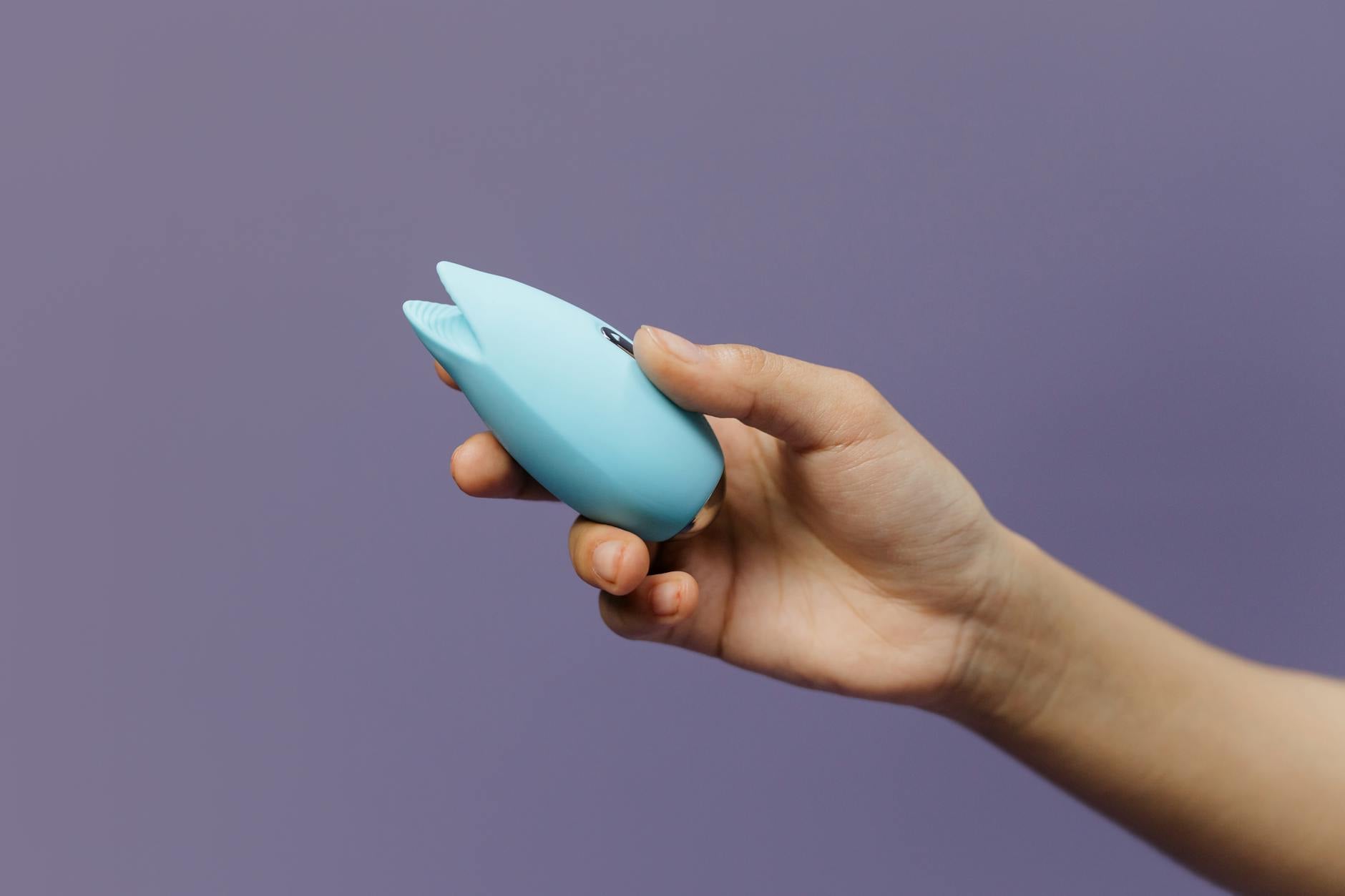
Let's talk about what actually changes
You quit hormonal birth control, and suddenly your lemon clitoral vibrator doesn't feel the same. Maybe it's too intense. Maybe it's not intense enough. Maybe your body takes longer to warm up before you even want to touch it. None of this is in your head, and none of it means your vibrator broke.
What happened is your hormones just rewired your entire arousal system.
The hormone shift that nobody warns you about
Hormonal birth control suppresses your natural testosterone and estrogen fluctuation. When you stop taking it, your body restarts its own hormone production within days. This isn't a gentle process. It's a reboot.
Here's what gets affected: clitoral blood flow, tissue sensitivity, vaginal lubrication speed, and how quickly your nervous system responds to stimulation. You also get your testosterone back. Yes, people with vulvas make testosterone, and it's a massive player in desire and arousal intensity. That's the hormone you've been missing.
Everything you felt during the first week of stopping birth control (mood shifts, breast tenderness, libido changes) is the same system that's changing how your lemon vibrator feels against your body.
Why your clitoris suddenly feels hypersensitive (or numb)
The sensitivity shift goes two directions, and it's worth understanding which one is happening to you.
Many people experience heightened clitoral sensitivity in the first 2-4 weeks after stopping hormonal contraception. This is because your estrogen is rising from baseline (suppressed by the pill) back to its natural cycle peak. Higher estrogen thickens vaginal tissue and increases blood flow to the clitoris. More blood flow means more nerve activation, which means the same vibration pattern on your lemon clitoral vibrator suddenly feels stronger.
If this is you, you might need to start on a lower pressure setting than you used before. The Lem's gentler patterns (1-3) were designed partly for exactly this post-hormonal shift. You're not broken. You're just more sensitive, which is actually a sign your body is recalibrating.
Other people go the opposite direction. Their sensitivity dips temporarily because their progesterone is rising for the first time in years, and progesterone has a dampening effect on arousal. If you're in this camp, you might find you need a higher pressure setting or longer warm-up time to reach the same place you reached before.
Neither pattern is permanent. Both usually settle within 4-8 weeks.
The arousal speed slowdown is real
Hormonal birth control artificially keeps your arousal system in a steady state. There's no peak, no valley. Your desire stays relatively flat and consistent (which is why some people on hormonal contraception report lower libido, and others feel relief from the hormonal rollercoaster).
When you stop, your body remembers how to cycle. Arousal builds faster at some points in your cycle and slower at others. Right after stopping, many people find that the warm-up phase gets longer overall. Your body needs more time to build to the point where clitoral stimulation feels good rather than just neutral.
This is worth knowing because it changes how you use a lemon vibrator. Instead of jumping straight to it, try 10-15 minutes of other foreplay first. Let your system remember how to build arousal naturally. Then introduce your vibrator once you're already halfway there. You might find the experience is richer because you're not relying on the vibrator to do all the heavy lifting.
The orgasm pattern shift is the biggest surprise
A lot of people report that their orgasms feel different after stopping hormonal birth control. Not worse or better necessarily. Just different. They might be more intense, or they might feel more scattered. They might come faster, or they might take longer to trigger.
This happens because the pill has been blunting your natural hormonal peaks. Your orgasmic response is partly governed by whether you're in a high-estrogen or high-progesterone phase of your cycle. For years, you've been in a flattened, artificial state. Your body needs to relearn its own rhythm.
Most people find this is actually positive information once they understand it. If your orgasms feel different, it's not permanent. Your body is adjusting, and within 2-3 cycles, you'll develop a new normal. You might discover you have a wider range of orgasmic responses now. Some days it's easy and intense. Other days it takes more time. That variance is actually your body working correctly.
Practical adjustments for your lemon sucker or clitoral vibrator
Here are the changes I recommend to people in the first month after stopping hormonal contraception:
Start lower, go up. If you were using the Lem at pattern 5-7, try starting at 2-3 for a week. See how your body responds. You can always increase. You can't un-feel intensity that was too much.
Track your cycle. You're probably tracking it anyway, but this matters for pleasure optimization. Mark when your sensitivity peaks and when it dips. Use that intel to plan your solo time. Some days your vibrator will feel amazing. Other days it'll feel like your clitoris is protected under a blanket. That's information, not failure.
Extend foreplay. Hormonal contraception made your body fast at warming up. Your newly unmedicated body might not be. Budget 15-20 minutes of manual or external stimulation before you reach for your lemon vibrator. This is not a compromise. It's actually more pleasure because arousal is already climbing.
Give it 6-8 weeks. Your body doesn't stabilize its new hormone production overnight. By week 6 or 8, most people feel their sensitivity and arousal speed settling into a new rhythm. If something still feels off after that, that's worth flagging to a gynecologist, but most of the time, your system just needs to remember how to do its own thing.
What this means for partnered pleasure
If you're using a lemon clitoral vibrator with a partner, this transition is worth naming out loud. You might need to adjust when you use it during sex, how long you warm up together, or what patterns feel good.
I've seen couples think their partner has lost interest because arousal got slower, or assume something broke in the relationship when really the person's hormones just rebooted. One conversation about the actual biology saves a lot of unnecessary worry.
The practical part is simple. After you stop hormonal birth control, you're essentially re-learning what your natural arousal cycle feels like. Your partner doesn't have to understand the biochemistry. They just need to understand that your body is adjusting and that you might need a different approach for a little while. That's not rejection. That's information.
The longer-term picture
After the initial adjustment period (usually 2-3 months), most people find they have a much wider range of pleasure available to them than they did on hormonal contraception. Desire cycles back in, orgasms feel more varied, and your sensitivity becomes more dynamic.
Some people discover they prefer the experience of cycling hormones. Others find they prefer hormonal stability and choose to go back on a different type of contraception. Both are valid. But most people who take a couple months to adjust find that their pleasure becomes richer, not worse. The adjustment just feels weird at first because it's different from what you've gotten used to.
Your lemon vibrator isn't the problem. Your body is doing exactly what it's supposed to do. Give yourself and your system grace through the recalibration period. The payoff is usually worth the adjustment.
People also ask
How long does it take for clitoral sensitivity to return to normal after stopping birth control?
Most people stabilize within 4-8 weeks, though some take up to 12 weeks. This aligns with how long it takes your ovulatory cycle to regulate. The sensitivity you experience right now (whether heightened or muted) is usually temporary. Your body is ramping up its own hormone production after years of suppression. Once your natural cycle settles into a rhythm, your baseline sensitivity will too. Keep tracking what you notice so you can see the pattern.
Can I use my lemon clitoral vibrator the same way as before?
Not immediately. Your body's responsiveness has changed, so the patterns and intensity levels that worked before might not work now. If you were using higher settings, try dropping down temporarily. If you found you needed minimal warm-up time, budget more now. These aren't permanent changes. They're adjustments for the transition period. Most people return to their previous preferences after a few months, though some discover they prefer their new settings. Think of it as recalibration, not damage.
Is it normal for arousal to take longer after stopping the pill?
Completely normal. Hormonal contraception kept your system in a steady state where arousal could climb quickly and stay consistent. Your natural cycle is slower to build at some points and faster at others. This is your body's actual baseline. Give yourself more time for foreplay and warm-up. Use that time for other touch before you introduce your vibrator. Many people find the experience is actually more satisfying because arousal is deeper and more engaged.
Should I switch to a different vibrator after stopping hormonal birth control?
No. You don't need a new lemon vibrator or different adult toy. You need to adjust how and when you use the one you have. Most of the time, shifting your settings and warm-up approach resolves the weirdness. The Lem's range (patterns 1-7) is designed to meet you wherever you are in your hormonal cycle, so you have flexibility built in. Give it a month with adjusted settings before you think about switching tools.
Why do orgasms feel different after stopping the pill?
Your orgasmic response is partly controlled by where you are in your hormone cycle. The pill flattened that cycle, so you had consistent orgasms at a consistent intensity. Now your body is cycling again. Some phases of your cycle will produce easier, more intense orgasms. Other phases might require more stimulation or feel more subtle. This variation is normal and healthy. Your body isn't broken. It's cycling correctly. Track your cycle and your orgasms together and you'll see the pattern.
Will my libido come back after stopping hormonal contraception?
For most people, yes, within a few weeks to a few months. Hormonal contraception suppresses testosterone, which is a key player in desire for all bodies. Once you stop taking it, your testosterone production restarts. Most people experience a noticeable return of sexual interest and spontaneous arousal. If your libido doesn't bounce back after 3 months, that's worth discussing with a gynecologist. It might point to something else (stress, relationship dynamics, other health factors), but the usual pattern is that desire returns as soon as your natural hormones stabilize.
What to do right now
If you stopped hormonal birth control and your lemon vibrator suddenly feels weird, you're experiencing exactly what your body should be experiencing. Adjust your settings down temporarily. Give yourself more time to build arousal before you use it. Track how your sensitivity and desire shift across your cycle. By week 6 or 8, you'll have a clear picture of your new normal.
Your pleasure matters, and your body's adjustment is legitimate. If you're working with a partner and need help navigating this conversation, reach out to talk through what's happening and how to stay connected during the transition. You don't have to figure this out alone.