
The myth that won't die
Honestly, the most common question I hear about lemon vibrators goes something like this: "If I use one too much, will I stop being able to feel anything?"
There's a real kernel of concern here, and I get why. You've probably heard the story. Someone uses a vibrator regularly, then can't orgasm without it, then can't orgasm with it, and suddenly they're numb forever. It's presented as biological fact. It's not. It's mostly urban legend mixed with a tiny bit of misunderstood neuroscience.
Let me separate what's actually true from what people have made up.
What the research actually shows about vibrator use
The fear of vibrator-induced desensitization comes from a real phenomenon called habituation. Your nervous system adapts to repeated stimulation. If I keep poking your arm in exactly the same spot with exactly the same pressure, eventually you feel it less. That's real neurology.
But here's what's important: that's not what happens during sex with a vibrator. Your body isn't getting poked in the same spot with the same pressure. You're moving. You're varying intensity. You're changing pattern. You're breathing differently. Your arousal is building. All of that prevents the simple, boring habituation your arm experiences.
Studies on vibrator use and sensation are actually pretty sparse, because obviously there's limited funding for this research. But the work that does exist doesn't show permanent desensitization from lemon vibrators or any clitoral vibrator. What we do see is that regular users sometimes report needing higher intensity to reach orgasm. That's different. And it's usually reversible.
Think of it like this. If you listen to the same song at volume 5 every day, eventually volume 5 feels quiet. Turn it off for a week, and volume 5 sounds normal again. That's not hearing loss. That's adaptation. Your nervous system recalibrates.
Why sensation actually changes (and it's usually not the vibrator)
Most of the time when someone says "I lost sensation," something else is going on. Here are the actual culprits.
Hormonal shifts. If you're on birth control, adjusting your birth control, approaching perimenopause, or dealing with any endocrine shift, your baseline clitoral sensitivity changes. This has nothing to do with your Lem vibrator and everything to do with estrogen and testosterone. How to Use a Lemon Vibrator When Arousal Takes Longer After 40 walks through these transitions in detail.
Medications, especially antidepressants and some blood pressure drugs. These genuinely numb sensation as a side effect. It's not about vibrator use. It's about chemistry. If your sensation changed after starting a new prescription, mention it to your doctor. There's often an alternative that doesn't flatten pleasure.
Pelvic floor dysfunction. A tight pelvic floor reduces sensation because the muscles that sense pleasure are literally clenched. Add a vibrator to that, and you get less input reaching your nervous system. The vibrator isn't the problem. The underlying tension is. This is worth working through properly.
Stress and distraction. Your brain receives sensation. If your brain is somewhere else (replaying an argument, worrying about money, wondering if you're doing this right), you feel less. A vibrator can't fix inattention. Nothing can, except addressing what's distracting you.
Reduced arousal or desire. If your overall arousal is lower, your clitoral engorgement is less, and sensation feels muted. This is a feedback loop problem, not a vibrator problem. Sometimes it's situational (strained relationship, work stress). Sometimes it's systemic (hormones, medication). Either way, the Lem vibrator isn't causing it.
The real thing that does happen with vibrators
Here's what I actually see clinically, and it's different from desensitization.
Some people develop a pattern preference. They use their Lem vibrator on pattern 3 because that's what works. Then when they try a partner, or a different toy, or manual stimulation, nothing else hits quite the same. It feels weak or wrong.
This isn't numbness. It's preference. Your nervous system has learned a specific pathway to orgasm. That's actually useful information. You now know what works for you. The issue is that it can make partnered sex feel less satisfying if your partner can't replicate that sensation.
The fix is straightforward: you vary your routine intentionally. Use pattern 1 sometimes. Use it at lower intensity. Skip a few days. Try manual stimulation. Introduce your partner to your Lem so they see how you use it and understand the baseline.
Mixing up your stimulation isn't a chore. It's actually where pleasure expands.
The difference between reduced sensation and preference adaptation
Here's how to tell which one you're dealing with.
True sensation reduction: You feel less all the time. You can't get aroused easily. Even manual touch feels distant. Orgasm takes significantly longer or doesn't happen at all. This usually has a cause outside the vibrator itself (hormones, medication, underlying health stuff).
Pattern preference: Your Lem vibrator works great. Other things feel okay but less intense. You can still orgasm with other methods, it's just less efficient. You feel normal sensation everywhere else.
If it's the first one, the vibrator isn't your problem, and using it less won't help. You need to find the actual cause. If it's the second one, you're probably fine. You've just learned what's efficient for your body.
When to actually worry and what to do
If sensation truly feels lost, here's the real checklist.
First, take a break from your Lem vibrator for two weeks. Not because you're likely broken, but to establish a baseline. Do you get sensation back? That tells you whether this is adaptation or something else.
Second, see your doctor if sensation doesn't return. A gynecologist or primary care physician can check for underlying stuff like nerve damage, hormonal issues, or medication side effects. Bring the honest timeline. They're not there to judge.
Third, if you do get sensation back after a break, reintroduce variety when you resume. Use different intensities. Space sessions further apart. Alternate between your Lem and other methods. Your nervous system will recalibrate to normal sensitivity.
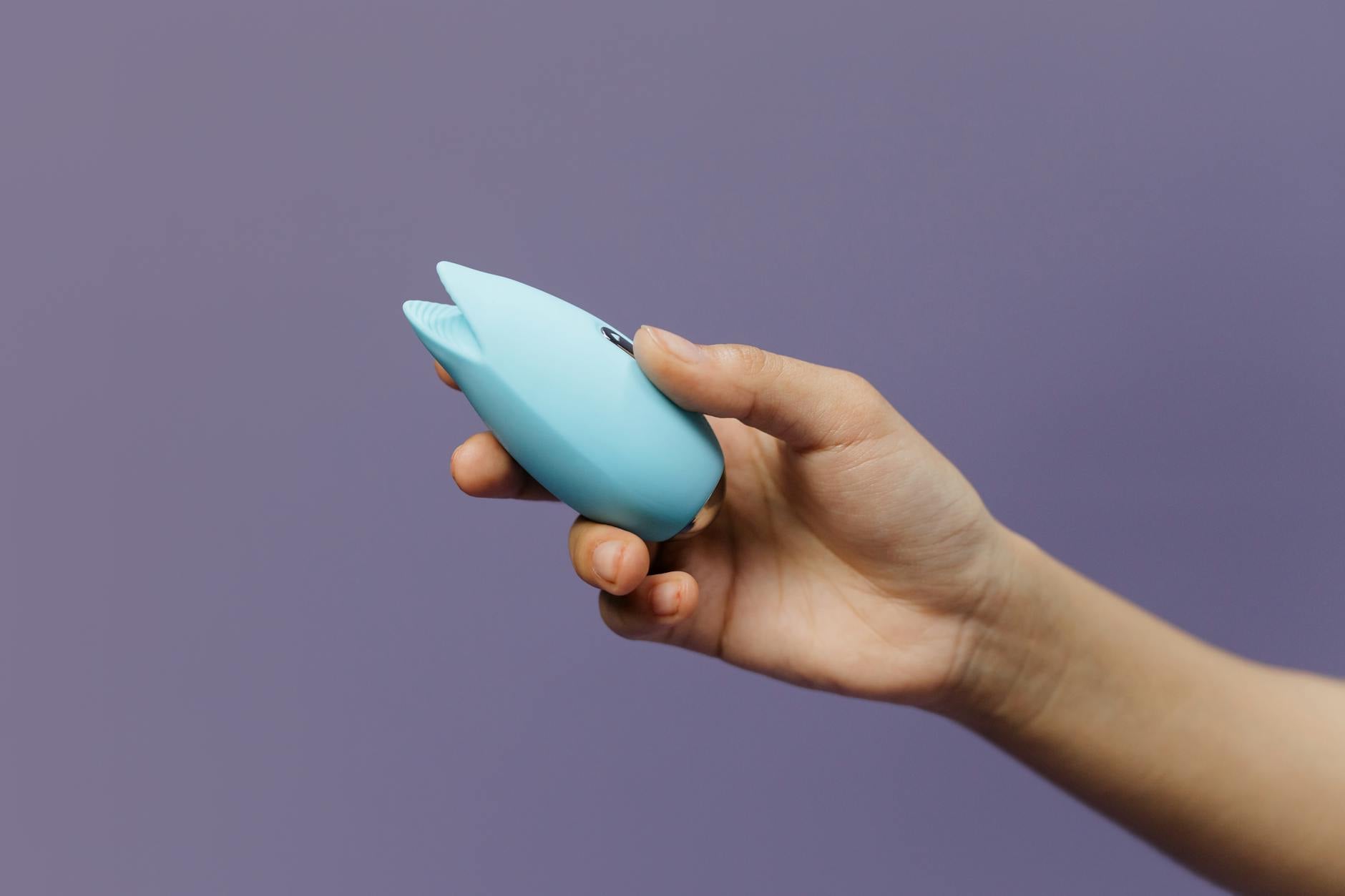
Photo by cottonbro studio on Pexels
The actual relationship between vibrator intensity and sensation
Here's something that confuses people. Stronger vibrators (like The Lem, which uses precision air-suction technology) can sometimes make it harder to feel subtle sensation afterward. Not because they've damaged you. Because you've experienced a specific intensity threshold, and now lower intensities feel muted by comparison.
It's like eating really spicy food then tasting mild food. The mild food isn't bad. You've just temporarily shifted your reference point.
This is why I recommend not maxing out your vibrator intensity every single time. Vary it. Use patterns 1 and 2 more than patterns 5 and 6. Give your nervous system a reason to stay sensitive to range rather than chasing the highest peak.
The piece everyone skips: communication matters
If you're in a partnership and sensation feels different during sex together, that's actually a conversation, not a medical emergency. Your partner might feel the difference too and worry they're doing something wrong. Or they might not know you use a vibrator alone and think you've just lost interest.
Say it directly: "My body feels different lately." "I want to try something new together." "I've been using a vibrator, and I've learned what works for me. I want to share that with you." Most partners find that relieving, not threatening. It's useful data.
The bottom line on lemon vibrators and sensitivity
A lemon clitoral vibrator doesn't cause permanent desensitization. Temporary adaptation, yes. Pattern preference, sometimes. But permanent numbness? That's not how your nervous system works.
If you're experiencing reduced sensation, look for the real cause. It's probably hormones, stress, medication, or your brain being somewhere else. A vibrator can't create those problems, and taking a break from The Lem won't fix them.
Use your lemon vibrator confidently. Vary your routine. Stay curious. And if something genuinely feels off, get it checked out. Your sensation matters. The vibrator's not the enemy here.
People also ask
Can using a vibrator too often make you numb?
Not permanently, no. Your nervous system adapts to repeated stimulation through habituation, but that's reversible. If you always use the same pattern at the same intensity, your body becomes efficient at that specific input. Taking a break or mixing up your routine restores baseline sensitivity. True numbness usually points to something else: hormonal changes, medication side effects, pelvic floor tension, or stress affecting arousal. If sensation doesn't bounce back after two weeks without vibrator use, see a doctor.
How long does it take to regain sensation after using a vibrator a lot?
Most people notice sensitivity returning within 3 to 7 days of taking a break. Some take two weeks. It depends on how long you were using high-intensity patterns regularly and what your baseline was. The key is variation, not abstinence. When you resume using your Lem vibrator, alternate between different patterns and intensities. This keeps your nervous system engaged across a range rather than locked into one frequency.
Does The Lem vibrator cause more desensitization than other toys?
No. The Lem uses air-suction stimulation rather than direct vibration, which is actually gentler on tissue over time. Some users find it's less likely to cause temporary adaptation because the sensation profile is different from traditional vibrators. That said, any toy, used at maximum intensity every time, can create pattern preference. The issue isn't the toy. It's repetition without variation.
Is it normal to need a higher intensity setting on your vibrator over time?
Yes, that's normal and reversible. It's called adaptation, not damage. Your nervous system becomes efficient at detecting a specific stimulus. If you always use pattern 5 intensity, pattern 3 feels faint. But if you drop back to pattern 3 for a few days, it feels normal again. This is actually a sign to rotate through your settings intentionally. Use pattern 1 sometimes. You'll surprise yourself with what feels good.
Can antidepressants and a vibrator together cause permanent numbness?
Antidepressants can reduce sensation as a side effect. That's not from the vibrator. If you've started a new SSRI or SNRI and notice numbness, mention it to your prescriber. Often there's a dose adjustment or alternative medication that preserves sensation. A vibrator doesn't interact with medication to make things worse. But combining reduced sensation from medication with a vigorous vibrator routine might mean you feel less overall. Talk to your doctor about what's actually happening before assuming the vibrator is the problem.
What's the difference between desensitization and just preferring your vibrator?
Desensitization means sensation is genuinely reduced everywhere. Orgasm is harder. Arousal is slower. Manual touch feels distant. Preference means your Lem vibrator works brilliantly, but other methods feel less intense by comparison. You can still orgasm without it. Things just feel more efficient with it. Preference is normal and useful. It means you know your body. True desensitization points to an underlying issue (hormones, medication, stress, health) that needs investigating. The vibrator isn't the problem in either case.