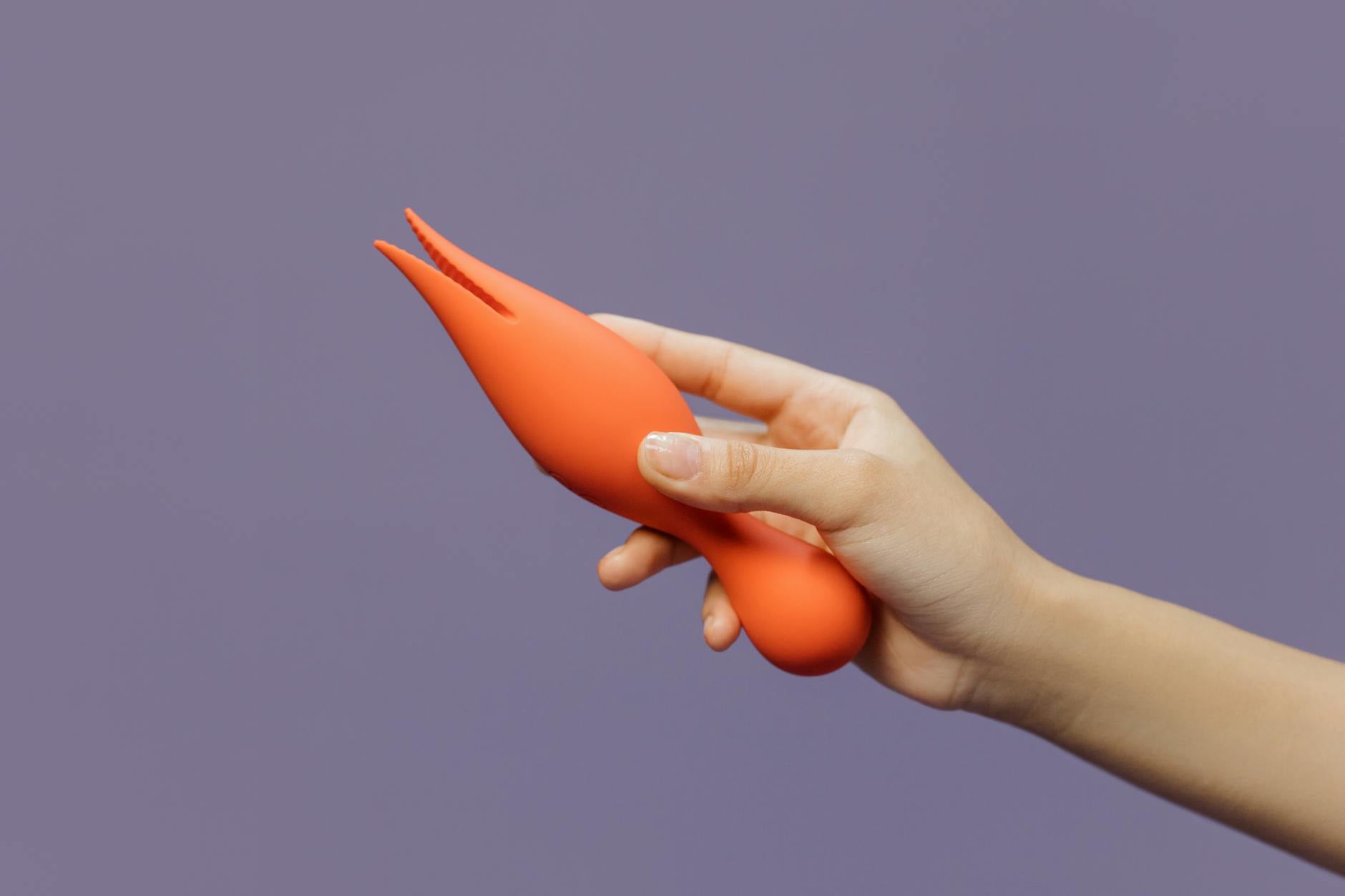
How to Introduce a Lemon Vibrator to Your Partner: A Communication Guide
Let's be real. You're thinking about bringing a lemon clitoral vibrator into your sex life, and you're terrified your partner will feel replaced, rejected, or emasculated. That fear is completely normal. It's also almost always wrong.
I've worked with hundreds of couples navigating this exact moment. The ones who communicate well end up with better sex and closer relationships. The ones who don't communicate often end up resentful, confused, or just... stuck. Here's how to be the first group.
The research that should ease your mind
About 70% of women use some form of vibrator at some point in their lives. Among coupled women, roughly 80% want their partners to know about it or use it together. Most partners aren't offended. Most are relieved. Most want to understand what brings their partner pleasure.
Here's the thing nobody talks about: many partners are actually waiting for permission to have this conversation. They might feel like bringing it up would make them seem kinky or demanding. Your partner might have been thinking about this too and just didn't know how to start.
Why the conversation matters more than the vibrator
The lemon vibrator itself is just a tool. The conversation is the real gift. When you can talk openly about what you want, what feels good, and what you're curious about, you've cracked something that most couples never access. That's not sexy logistics. That's intimacy.
Most couples have never actually talked about physical pleasure in a direct, non-performative way. You've probably had sex hundreds of times but never said, "I want more stimulation on my clitoris" or "I come faster when we do X." A vibrator is often just the thing that finally makes that conversation possible.
Timing: when to bring it up (and when not to)
Do not bring this up during sex. Do not bring this up mid-argument. Do not text it when you're drunk.
Instead: pick a calm moment outside the bedroom. This might be a car ride, a walk, or sitting on the couch with tea. You want relaxed energy, privacy, and time to actually talk. Not rushed. Not in public. Not when either of you is stressed or defensive.
The best opener I've found is something like: "I've been thinking about our sex life, and I want to try something new. Can we talk about it?" This signals seriousness without triggering defensiveness.
The actual script (use this or adapt it)
Opening: "I really enjoy sex with you. I also want to explore what feels even better for my body, and I think it would be fun if we did that together."
The ask: "I've been reading about clitoral vibrators. I think it might feel amazing, and I want to try one with you. Would you be open to that?"
Reframe immediately: "This isn't about you not being enough. My body just responds to that kind of stimulation differently than I respond to penetration alone. It's like... the difference between a great massage and a back-scratcher. Both feel good. Different tools, same person."
Invite participation: "I'd love to use it together. You could be the one to introduce it, or we could explore it at the same pace."
Notice what this script does: it affirms the relationship, it explains the logic clearly, it removes shame, and it invites collaboration. It's not a complaint. It's not a request for him to do better. It's a shared experiment.
What to expect: the five common responses
Response 1: Immediate enthusiasm. About 40% of partners light up. They might say, "Yes, I've thought about this too," or "What kind?" This is the easiest version. Just say yes back and move to logistics.
Response 2: Hesitation followed by yes. They might need a minute to process. "Oh. Um. Yeah, okay. Tell me more." Give them space to ask questions. Don't interpret silence as rejection. Silence is often just processing.
Response 3: The insecurity spike. "Does that mean you're not satisfied with me?" This requires a gentle, direct answer: "No. This is about deepening what we already have, not replacing it. My body responds to vibration. That doesn't diminish what you do." If he continues spiraling, suggest a separate conversation about his insecurities in the relationship more broadly. Sometimes this isn't really about the vibrator.
Response 4: Practical objections. "I don't know how to use it" or "Where do we even get one?" Easy. You research it together. You watch a tutorial together. You make it collaborative.
Response 5: A hard no. This happens less often than you'd think, but it does happen. If your partner says no, ask why. Is it a values thing? A shame thing? A control thing? The reason matters. A no because "I'm uncomfortable with sex toys" is different than a no because "I don't think you should have pleasure outside penetration." One is work-through-able. One is a red flag.
How to actually introduce it during sex
Don't surprise him with it. You've already talked about it, so you both know it's coming. You might say, "I want to try this tonight, is that okay?" Most people will say yes if they've already agreed to it in principle.
Start slow. You might use it on yourself while he's inside you. You might use it on yourself while he watches. You might hand it to him and say, "Try this." The point is to take the weirdness out by just... doing it matter-of-factly. It's not a big production. It's just another layer of what you're already doing together.
If he seems uncomfortable during sex, pause. Ask what's going on. He might need reassurance. He might need a break. He might need to feel more in control. Communication doesn't stop once you're naked.
The reframing that actually works
Most men have been taught that their job is to make their partner come. The message is subtle but consistent: if she needs a vibrator, he failed. This is toxic nonsense, and you need to actively counter it.
Here's the truth: you might come from penetration alone. You might not. Most women can't. That's not a failure. That's neurology. A clitoral vibrator like the Lemon isn't a critique of his performance. It's a tool that matches your body's actual wiring. Using one together isn't a backup plan. It's an upgrade to your shared pleasure.
You might say: "My body needs this kind of stimulation to have really good orgasms. That's not about what you're lacking. That's about what my nervous system responds to. And honestly, watching you enjoy giving me pleasure? That's hot."
What happens after the first time
Be casual about it. Don't make it a huge deal the next day. Don't ask, "Did you like that?" in a way that makes it sound like you're fishing for approval. Just let it integrate into your sex life the way any new thing does.
Then, maybe a week later, check in: "That felt really good. Want to do it again?" or "I'm curious what you thought about that." You're opening the door for him to process his feelings and ask questions without making it weird.
One thing I've noticed with couples who use vibrators together: they tend to communicate better about sex overall. Suddenly talking about what feels good becomes normal. You might start asking for other things. He might too. The vibrator is just the first domino.
If your partner still seems weird about it
Let him adjust. Some people need time. If he's been brought up to feel insecure about anything outside the conventional, it takes a minute to rewire that.
But also be honest with yourself: if he's still expressing resentment or controlling your body after you've clearly explained your needs, that's information. That's not a him-problem. That's a relationship-problem. You deserve a partner who wants your pleasure to happen however it happens.
The conversation is the thing
I've seen couples use vibrators successfully and stay emotionally distant. I've also seen couples who avoided vibrators but learned to talk openly and experienced massive reconnection. The tool matters less than the communication.
A lemon vibrator can be the catalyst for a much bigger shift in how you and your partner relate to each other's bodies and desires. It can be the moment you both realize that pleasure isn't zero-sum. It can be the beginning of real sexual confidence in your relationship.
But only if you actually talk about it.
Start with the conversation. The vibrator is just what comes next.
People Also Ask
Will my partner feel replaced if I use a vibrator with him?
Most partners don't feel replaced. They feel relieved. There's a persistent myth that vibrators replace partners, but that's not how bodies work. A vibrator provides a specific type of stimulation that fingers, tongues, and penetration don't. It's not an alternative to intimacy with your partner. It's an enhancement of it. The couples I work with who use vibrators together report feeling more connected, not less, because the conversation that precedes it opens up a level of honesty that wasn't there before.
What if my partner gets defensive?
Defensiveness usually comes from a learned shame around female pleasure or a misunderstanding that you're dissatisfied with him. If he goes defensive, pause and address the real issue. Say something like, "I love sex with you. I also want to explore my body more, and I want to do that with you." Separate the tool from the relationship. If he continues to be defensive or controlling about your pleasure, that's worth examining more broadly in your relationship. You deserve a partner who celebrates your orgasms, not one who gatekeeps them.
Can I use a lemon vibrator if I've never used a vibrator before?
Absolutely. The Lemon vibrator is designed to be intuitive. It's not intimidating. If you're new to vibrators, start on a lower setting and give yourself time to explore without pressure. Using it with your partner can actually feel safer than using it alone for the first time. Just go slow and communicate about what feels good.
How do I bring this up without sounding like I'm criticizing his performance?
Frame it as an exploration, not a complaint. Say, "I want to experience more intensity in a specific way, and I think it would be fun for us to try together." This makes it collaborative, not accusatory. The key is to separate his skills from your body's needs. He might be amazing at what he does, and your body might still benefit from clitoral vibration. Both things can be true.
What if he wants to use it on me but I feel shy?
Shyness is normal at first. But being shy about your own pleasure is also something worth exploring. Your partner wanting to participate isn't something to be nervous about. He's saying, "I want you to feel good." That's good. You might start by using it on yourself while he watches, then gradually let him be more involved. The goal is to get comfortable with being pleasured, which is its own kind of intimacy.
Should I mention what type of vibrator I want?
Yes. Don't just say "vibrator." Say "I've been reading about clitoral vibrators, and there's one called the Lemon that I think I'd like to try." Being specific removes some of the mystery and makes it feel like you've actually thought this through, not that you're throwing an idea at him last-minute. Specificity builds trust.
The bottom line
Introducing a lemon vibrator to your partner is just an honest conversation about pleasure. That conversation might be the best thing that happens to your sex life. It might be the thing that finally makes you feel like you can ask for what you actually want.
Start with a calm moment, a clear explanation, and an invitation to explore together. Most partners will say yes. And if yours does, you're stepping into a version of your intimate life that's more honest, more responsive, and more connected than before.
That's worth the scary conversation. Always.