
Let's be real about pleasure after 40
Your body at 42 is not your body at 22. And honestly? That's often better. You know what you want, you're less worried about performance, and the mental clutter of fertility anxiety or someone else's expectations has usually lifted. But physically, things shift. Tissue changes. Arousal works differently. And here's where it gets interesting: the right tool, at the right moment, can make this phase feel like your most satisfying yet.
That tool, for many women over 40, is a lemon clitoral vibrator.
Why lemon vibrators are genuinely different for midlife bodies
Most vibrators work through penetration or broad surface vibration. A lemon vibrator uses air-pulse suction technology, which stimulates without requiring the kind of direct friction that can feel too intense on skin that's thinner and more sensitive than it was at 25. The sensation is more like a gentle mouth than a buzzing wand. For women navigating the tissue and hormonal shifts of midlife, this distinction matters enormously.
The clitoral area becomes more sensitive as estrogen drops. A traditional vibrator at full intensity might feel overwhelming or even uncomfortable. Suction-based stimulation from a lemon vibrator lets you build intensity gradually, starting at pattern 1 and working upward only when it feels right. There's no pressure, literally.
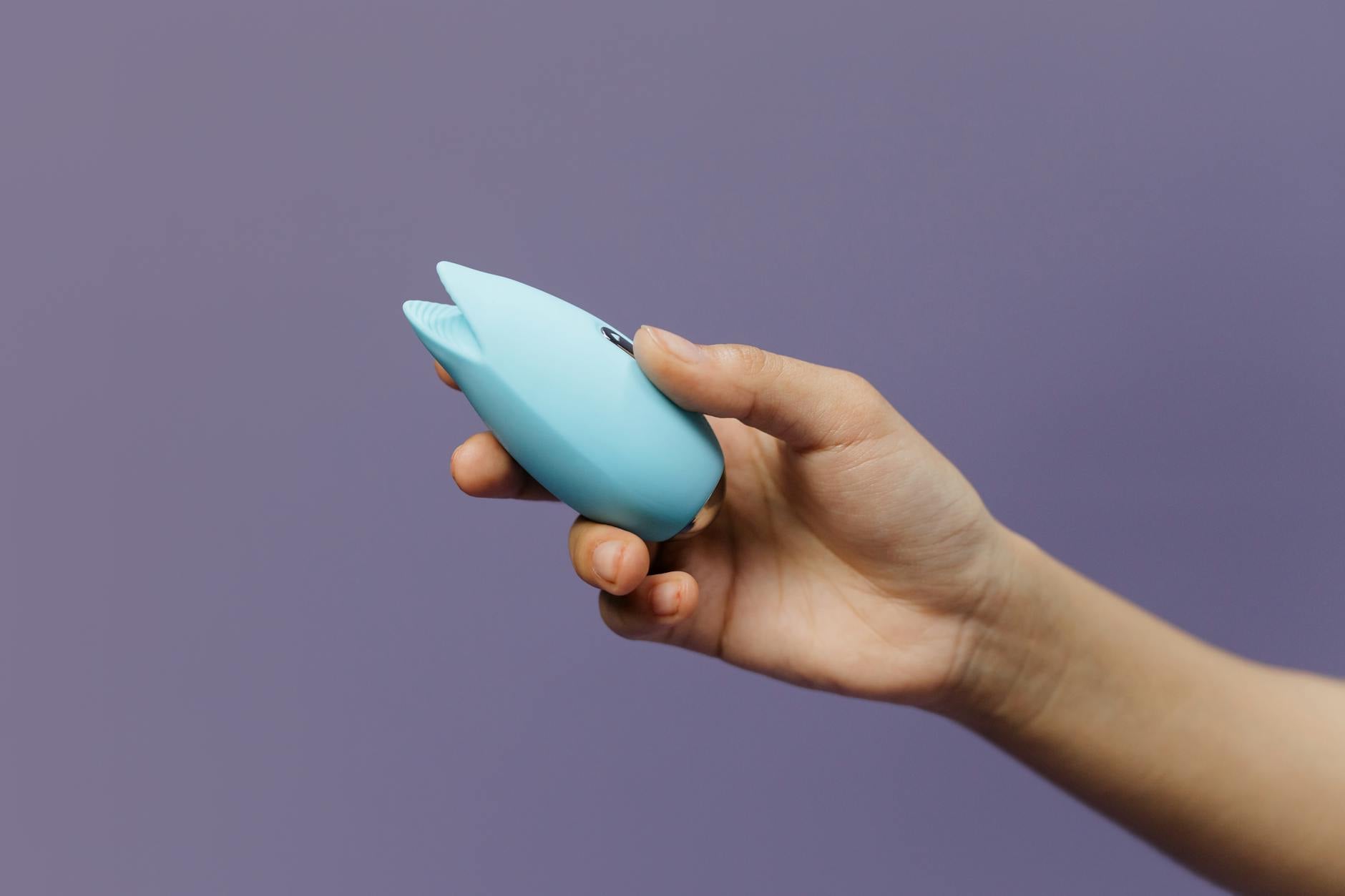
Photo by cottonbro studio on Pexels
The physiology that changes (and what actually stays)
Here's what happens: estrogen levels drop, collagen production slows, and the vaginal and clitoral tissues become thinner and drier. Blood flow can take longer to reach the area. Arousal that took 5 minutes at 30 might take 15 minutes at 45. That's not a decline. It's a shift. And it's completely workable.
What doesn't change: the density of nerve endings in your clitoris, the brain's capacity for pleasure, or your ability to orgasm. In fact, many women report that orgasms after 40 feel more intense and longer-lasting than they did earlier. Some say it's the mental freedom. Others say it's that they finally know what they're doing. Both are true.
A lemon sucker, as it's sometimes called, works specifically with this physiology because it doesn't require the same level of natural lubrication that traditional vibrators do. Suction creates its own stimulation mechanism. You're not fighting biology. You're working with it.
Tissue sensitivity and why gentler is often better
When estrogen drops, the protective mucous layer on genital tissue gets thinner. This makes the area more reactive to stimulation. It can also make certain sensations that felt pleasant before feel sharp or uncomfortable now. A lemon vibrator's pattern settings let you start incredibly gently. You control the intensity completely.
I recommend this to clients regularly: when you first use a clitoral vibrator designed with midlife bodies in mind, start at the lowest setting. Spend time there. Your body will tell you when it's ready to increase intensity. Many women find that they prefer staying in patterns 2 or 3 rather than maxing out. The sensation is more nuanced, more sustained, and often produces longer, deeper orgasms.
Water-based lubricant still matters. Even with suction technology, a small amount of quality lube makes everything feel better. It's not a sign of anything wrong. It's just what bodies need at this phase.
The mental shift that makes the physical part possible
Here's what I see happen in my practice over and over. A woman over 40 comes in saying she's "lost interest" or "things don't work anymore." What's actually happened: she's been managing everyone else's needs (partner, kids, aging parents, career) for two decades, and the idea of her own pleasure feels foreign or selfish.
Menopause or perimenopause doesn't kill desire. Burnout and invisibility do. Once that gets untangled—usually through a combination of honest conversation with a partner and genuine permission to prioritize yourself—sexual interest often returns. And when it does, having a tool that works with your body instead of against it makes all the difference.
This is where a lemon clitoral vibrator becomes almost psychological as much as physical. It's permission. It's proof that pleasure is still possible and, honestly, still important.
The partnership angle (if there is one)
If you're with a partner, this transition is easier when you can say clearly: "My body is different now. Here's what feels good." A lemon vibrator can be part of that conversation. Some partners feel relieved. The pressure to perform a certain way lifts. Some feel connected in a new way because they're learning what their partner actually needs instead of guessing.
It can also be entirely yours. Many women over 40 find that solo pleasure becomes its own practice—not instead of partnered sex, but as a necessary part of staying connected to their own body and desires.
Practical tips for using a lemon vibrator at this life stage
Start with the understanding that your body and nervous system might need time to warm up. Fifteen to 25 minutes of foreplay or solo stimulation isn't excessive. It's realistic physiology.
Think about timing. If you're exhausted, it's harder to feel pleasure. If there's stress hanging over your head, arousal becomes more difficult. This isn't weakness. This is how midlife brains work. Schedule pleasure when possible. That sounds unromantic. It's actually the most practical thing you can do.
Don't expect the same sensations or orgasm pattern that you had at 35. You might come faster now. You might take longer. The orgasm itself might feel different. Curiosity beats expectation every single time. You're not trying to recreate anything. You're discovering what works now.
Clean your lemon vibrator carefully after use. Silicone surfaces accumulate bacteria quickly. A little soap and water does the job. Let it air dry.
When to check in with a doctor
If stimulation becomes painful rather than pleasurable, that's information. Genitourinary syndrome of menopause (a real diagnosis involving tissue atrophy) is treatable, usually with topical estrogen. A menopause-informed gynecologist can assess whether this is what's happening.
If you've completely lost desire and it's not linked to stress, relationship issues, or other life stuff, testosterone therapy is worth discussing. It's more commonly prescribed in some countries than others, but it exists and it works for the right person.
But here's what I want to be clear about: physical changes at midlife don't require medical intervention unless they're painful or truly unwelcome. A shift in how pleasure feels? That's normal. That's age. And it's often an invitation to get curious rather than an alarm to raise.
The reframe that changes everything
Your body at 40, 45, 50 isn't a declined version of your body at 25. It's a different design. Different doesn't mean worse. It means you might need different tools and different timing. A lemon clitoral vibrator is one of those tools. It's designed for the clitoris you have now, not the one you had decades ago.
Your pleasure matters at this life stage. Maybe more than ever, because you finally know it, you've earned it, and you're not apologizing for it anymore.
People also ask
Are lemon vibrators safe for sensitive skin after menopause?
Yes, absolutely. In fact, they're often better for sensitive tissue than traditional vibrators because the suction mechanism doesn't require direct friction. The silicone is body-safe medical grade. If you have any sensitivities to silicone, that would apply regardless. Start at a low intensity setting and work upward. Your body will communicate what feels good.
Can I use a lemon vibrator if I have low libido after 40?
Low libido has causes. Sometimes it's hormonal (low estrogen, low testosterone). Sometimes it's relational (resentment, disconnection, boredom). Sometimes it's circumstantial (exhaustion, stress, life overload). A vibrator doesn't fix the underlying cause, but it can help you reconnect to your own body and pleasure while you're working on the bigger picture. For many women, that reconnection is the spark that rekindles interest.
Do I need special lubricant for a lemon vibrator?
Water-based lubricant is your best bet. It's compatible with silicone and washes off easily. Silicone-based lubes can degrade silicone toys over time, so avoid those. A small amount goes a long way. Think of it as supporting your body's natural response, not replacing anything.
How does a lemon sucker feel different than a regular vibrator?
A traditional vibrator buzzes. A lemon clitoral vibrator pulses rhythmically in a way that mimics suction. The sensation is warmer, more enveloping, less like buzzing and more like a gentle pressure and release. For many women over 40, especially those with sensitive tissue, it feels more natural and less intense than buzzier devices.
Can using a lemon vibrator make partnered sex less satisfying?
No. Many women find the opposite. Using a vibrator solo helps you understand your own pleasure. That knowledge makes partnered sex more satisfying because you know what you need and can communicate it clearly. It's not replacement. It's addition.
What if a lemon vibrator doesn't feel like anything?
Your body might need more time to warm up, or you might benefit from more lubrication. Try it at different times of day, with longer foreplay, and in a setting where you feel genuinely relaxed. Sometimes it takes a few tries. If it still feels like nothing after a honest few attempts, your nervous system or anatomy might just work differently. That's not a failure. That's information.
Pleasure doesn't have an age limit. It just changes shape. And when you have the right tool—one designed for the body you actually have right now—you often find that the best chapter is the one you're in.