
Let's start with the uncomfortable truth
Mismatched desire is the third most common reason couples end up in my office. Not infidelity, not poor communication about the big stuff. One person wants sex twice a week; the other wants it twice a month. One person initiates; the other waits. One person feels rejected; the other feels pressured. The resentment builds quietly until it becomes the background noise of the entire relationship.
Here's what nobody tells you: a clitoral vibrator like the Lem can actually help. Not by fixing the mismatch (that would be magical thinking), but by changing what the mismatch means.
Why desire levels differ in long-term relationships
First, the reassurance: this is normal. Research suggests that roughly 70% of couples experience some degree of desire discrepancy at some point. It's not a sign the relationship is broken. It's just how bodies and life rhythms work.
Desire dips for concrete reasons. Stress at work tanks testosterone. Childcare exhaustion makes touch feel like another demand on your body. Medication changes arousal. Hormonal cycles shift. And sometimes, honestly, one person's baseline desire is just higher than the other's. That's not a flaw. It's just different wiring.
The problem isn't the mismatch itself. The problem is the story we tell about it. The higher-desire partner feels unwanted. The lower-desire partner feels pressured and guilty. Both freeze. Both retreat. Neither actually talks about what they need.
Why vibrators change the conversation
A lemon clitoral vibrator introduces a third option: pleasure that isn't tied to the other person's readiness.
This matters more than it sounds. When desire levels are different, sex often becomes a negotiation about whether it happens at all. One person advocates; the other consents reluctantly. Over time, this dynamic becomes less about intimacy and more about obligation. The lower-desire partner starts to dread initiation. The higher-desire partner feels rejected. Neither of you is actually present.
But when you bring in a vibrator, something shifts. Suddenly, the higher-desire partner can have an orgasm without the lower-desire partner feeling forced to perform. And the lower-desire partner can stay close, connected, and involved without it requiring anything they don't have to give right now.
It's not a replacement for sex together. It's a way to keep pleasure alive while you sort out the timing.
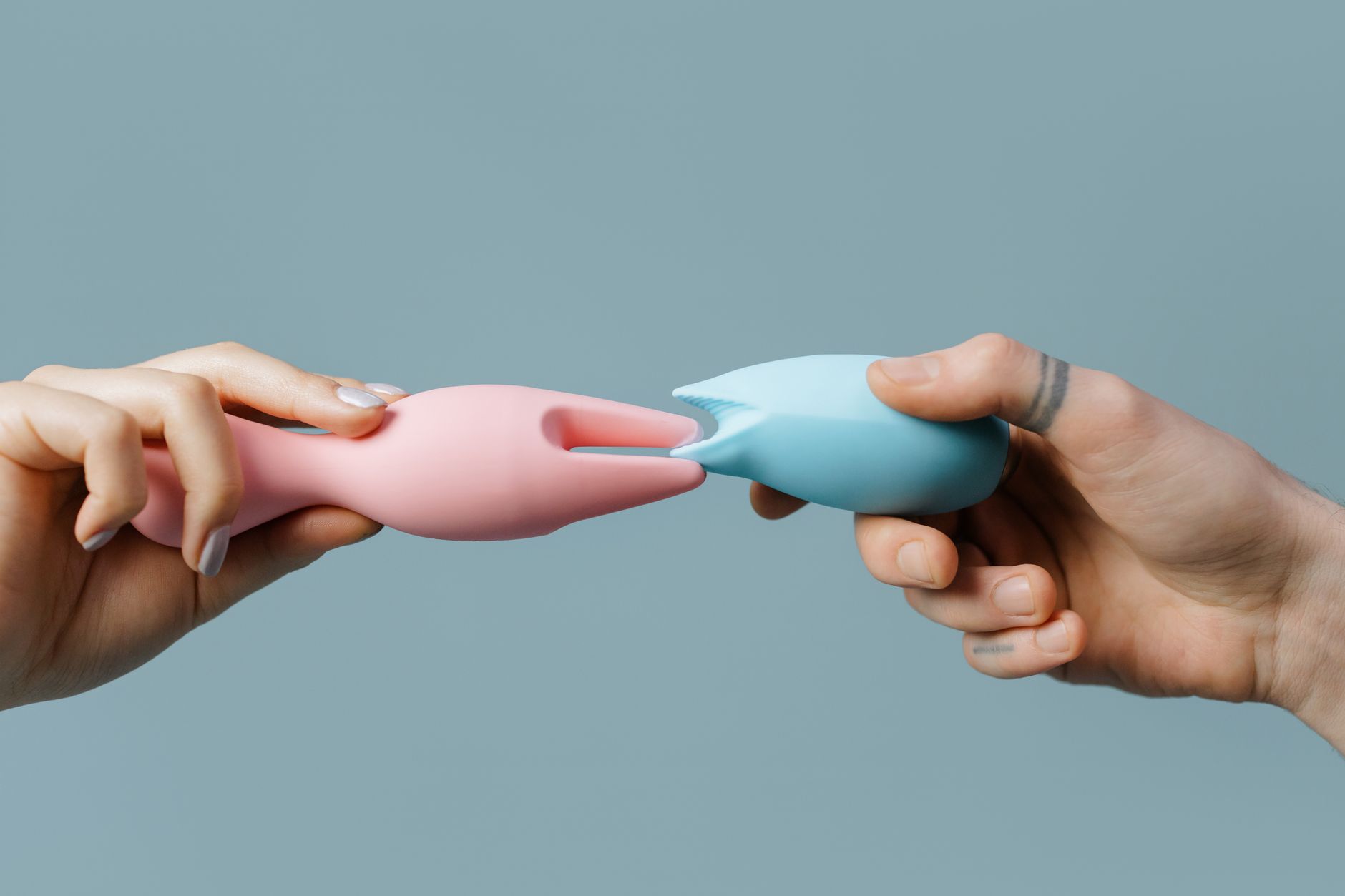
Photo by cottonbro studio on Pexels
The setup conversation before you bring it to bed
This is the critical part. Don't surprise someone with a vibrator during sex if there's already tension around desire. That will feel like pressure dressed up as spontaneity.
Instead, have the conversation when you're clothed, not touching, and not in the bedroom. Say something like: "I've noticed we want sex at different frequencies, and I hate that it's become this thing between us. I don't want you to feel guilty, and I don't want to feel rejected. I'm wondering if we could try something that helps both of us get what we need."
Then listen. Really listen. Your partner might be worried a vibrator means they're not enough. They might feel pressure to perform differently. They might be relieved. They might want nothing to do with it. All of those are valid.
If they're open to it, frame it clearly: this is about keeping pleasure in the relationship while you're working on the timing mismatch. It's not a fix. It's a bridge.
Three actual usage patterns that work
Pattern 1: The presence model. Your partner isn't in the mood for penetration or intercourse, but they're willing to be close. You use the Lem while they touch you, talk to you, or simply stay present. They might be reading, or they might be fully engaged. The point is they chose connection over absence. That's intimacy too.
Pattern 2: The dual-pleasure model. You're both in the mood, but at different intensities. They use fingers or a partner toy; you use the Lem. You're synchronized but not dependent. Someone can finish first without the other person feeling abandoned. The pressure to time everything perfectly dissolves.
Pattern 3: The solo-then-together model. You use the vibrator solo first, get close, and then invite your partner in for the final stretch. This takes the pressure off them to sustain arousal throughout. You're meeting them partially aroused instead of asking them to build from zero. They can participate in the final phase when they're actually ready.
None of these require both people to want sex at the same time. That's the point.
The emotional infrastructure that actually makes this work
Using a vibrator together doesn't fix desire mismatch on its own. What fixes it is the conversation underneath.
You both need to get curious about why the difference exists. Is the lower-desire partner experiencing depression or burnout? Are they stressed about finances? Do they feel emotionally distant from you? Sometimes desire is actually a messenger. You fix the underlying problem, and desire returns naturally.
For the higher-desire partner, the work is softer. It's releasing the fantasy that if they could just find the right technique or toy, their partner would want sex as much as they do. That fantasy is what creates pressure. Letting go of it paradoxically often makes things easier.
There's also the practical reality: if the lower-desire partner is doing emotional labor to accommodate the higher-desire partner's need, that labor needs to be acknowledged. This isn't about making sex happen. It's about making space for desire to exist without guilt.
When to involve a professional
If the vibrator conversation goes sideways, or if one partner feels deeply resistant to this approach, that's not a flaw in the strategy. That's information. It usually means there's resentment or disconnection that needs attention.
A relationship therapist trained in sex therapy or emotionally focused therapy can help. This isn't about fixing low desire (desire isn't always fixable), but about helping both partners feel less alone with the difference.
If one partner is experiencing depression, hormonal changes, or medication side effects affecting desire, a conversation with their GP is worth having. Sometimes the solution is a small medical intervention. Sometimes it's just naming the cause so it stops feeling personal.
What actually changes when you do this well
The higher-desire partner stops feeling rejected because rejection isn't what's happening. Someone just wants sex less often. That's neutral data, not a referendum on the relationship.
The lower-desire partner stops feeling guilty because they're no longer saying no to something that requires them to perform on demand. They can stay connected without stretching themselves.
Both of you get to keep pleasure in the relationship. That matters more than you'd think. It keeps the door open. It reminds you that you like each other.
Does this solve mismatched desire forever? No. But it stops it from becoming a source of resentment, which is often the real problem. When arousal takes longer after 40 or when stress changes how desire shows up, having tools like the Lem makes the adjustment feel less like failure and more like evolution.
The conversation is the vibrator. The vibrator is just the excuse to have it.
People also ask
Will using a clitoral vibrator make my partner feel inadequate?
Not if you frame it right. The conversation matters more than the toy. If your partner understands that this is about bridging a desire gap (not about them not being good enough), most people feel relief. The pressure gets distributed. But if there's already resentment in the relationship, a vibrator can feel like proof of that resentment. That's why the emotional setup is non-negotiable.
How often should we use the Lem together if our desire levels are different?
There's no standard. Some couples use it weekly. Some use it once a month. The point is it should feel good to both of you, not like another chore. Start with curiosity instead of a schedule. See what rhythm feels natural. If it starts feeling obligatory, pull back and talk about why.
Can a lemon clitoral vibrator actually make someone want sex more often?
Sometimes. If desire was low because sex had become uncomfortable or pressured, a vibrator can help you rebuild pleasure without the weight of expectation. But if desire is low because of depression, stress, or a medication side effect, the vibrator alone won't shift that. You'd need to address the root cause. Pleasure is restorative, but it's not magic.
What if my partner doesn't want to be involved when I use the vibrator?
That's fine. Some people aren't comfortable with that, and that boundary deserves respect. You can use the Lem solo while your partner is in another room, or you can save it for when you're alone. The goal isn't to force togetherness. It's to keep pleasure alive in whatever form works for both of you.
Is there a way to use a vibrator that actually brings us closer if we're feeling disconnected?
Yes. The key is presence over performance. Use the vibrator while maintaining eye contact, or have your partner touch you while you use it. Keep talking. Let them see you enjoy it. That vulnerability and openness is what creates connection, not the vibrator itself. The Lem is just the vehicle.
My partner thinks I'm using the vibrator as a replacement for them. How do I address this?
You address it by listening first. There's usually something real underneath that fear. Maybe they feel replaced generally, not just sexually. Maybe they're dealing with their own insecurity about desire. Once you understand what's actually being said, you can respond to that instead of defending the vibrator. Often it helps to be really explicit: "I want you. I also want to not resent you. This helps me do both." That's usually enough.