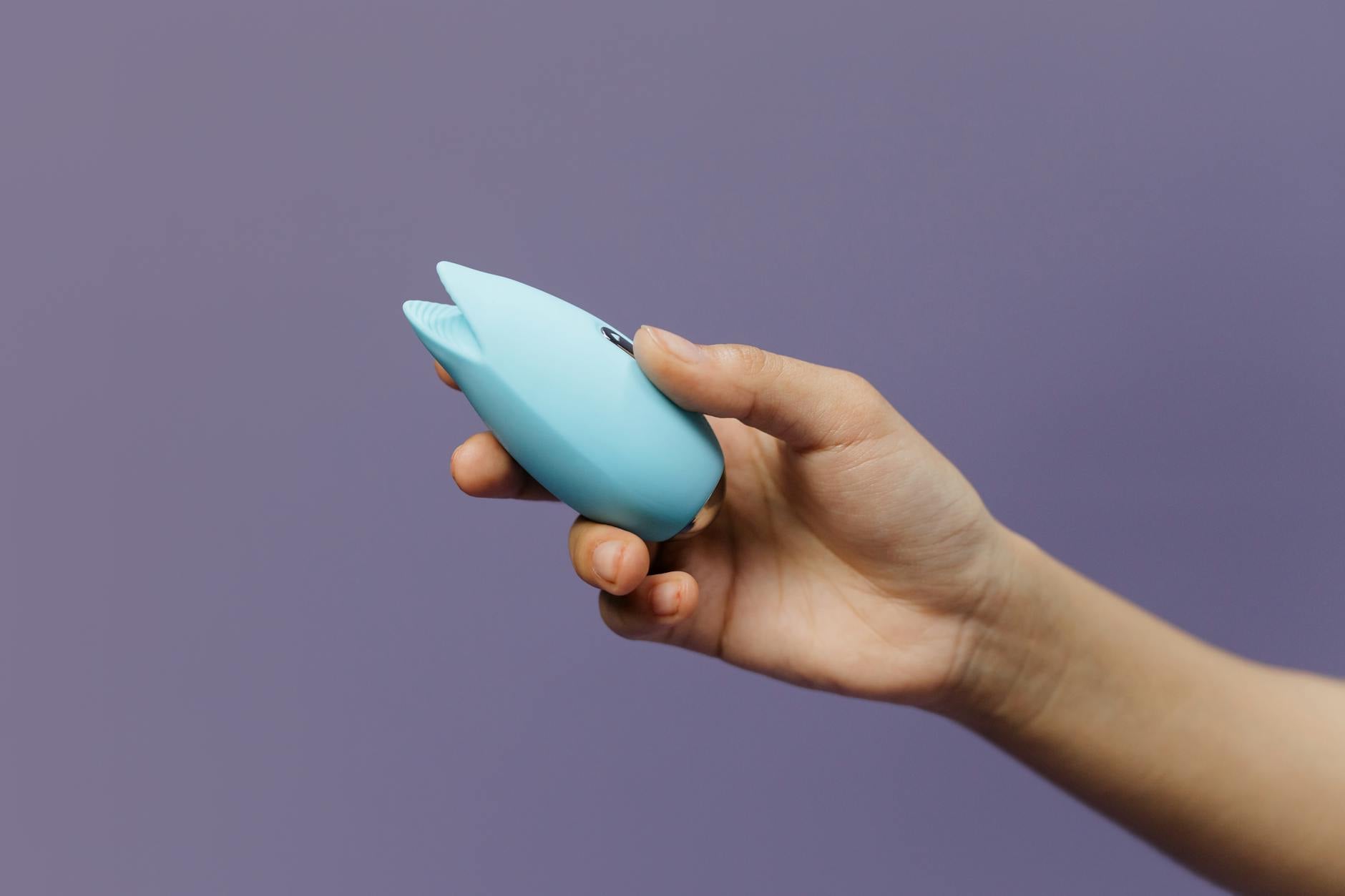
Let's start here: pleasure after trauma isn't broken
It's held. Your body learned to protect itself, and that's not a flaw. It's wisdom. But when you're ready to reclaim sensation, solo or with a partner, you need tools that honor that protective intelligence instead of overriding it. That's where a lemon clitoral vibrator comes in. The specific design of clitoral vibrators, especially suction-based designs like The Lem, works because they don't demand anything from your body. They offer. And you control every moment.
How trauma changes your nervous system's relationship to touch
Sexual trauma rewires what neuroscientists call the "threat detection system." Your nervous system learned that touch could mean danger, so it stays vigilant. That means arousal takes longer. Touch that feels safe in theory might trigger a startle response in practice. Orgasm might feel blocked, shallow, or weirdly disconnected from pleasure even when it happens. This isn't psychological weakness. It's biology.
The good news: your nervous system can also learn safety. Slowly. Repeatedly. With choice.
Why agency is the healing mechanism
Trauma, at its root, is a loss of agency. You were touched without consent. Your nervous system learned that your preferences didn't matter. Recovery starts with proving to yourself, again and again, that you are in control. A clitoral vibrator becomes a tool for rebuilding that control because every element is yours to command. You choose when to start. You choose the intensity. You choose when to stop. There's no pressure to perform, no one waiting for a response. Just you and a device that does exactly what you tell it to do.
This is not a small thing therapeutically. Therapists trained in trauma recovery often recommend solo exploration with vibrators precisely because the rebuilt sense of agency becomes part of the healing.
Starting small: the pacing protocol
Here's the practical approach I recommend to clients rebuilding pleasure after trauma:
Week 1-2: Exploration without stimulation. Hold The Lem. Turn it on at the lowest setting. Get used to the vibration without any genital contact. Let your nervous system learn that the sensation itself is safe. Do this for two minutes max. Your body doesn't need long exposure yet.
Week 2-3: External contact, lowest intensity. When you're ready, apply the lemon vibrator to your thigh, your lower abdomen, the area around your vulva without direct contact. The goal isn't pleasure yet. It's desensitization to the sensation in proximity to vulnerable areas.
Week 3-4: Direct contact, shortest duration. When that feels genuinely okay (not forced, actually okay), make contact with your clitoris. Five seconds. That's it. Switch off. Notice what your body felt. No pressure to continue.
Week 4 onward: Extending duration, finding rhythm. Once five seconds feels integrated, try 20. Then a minute. Let your nervous system set the pace. Some people take weeks on each step. That's exactly right.
The lemon vibrator advantage for trauma recovery
There are several reasons why clitoral vibrators, and specifically suction-based lemon-shaped designs, work well for people rebuilding after trauma.
First, they don't require penetration. Penetrative trauma carries its own separate nervous system impact. You can rebuild clitoral pleasure without touching internal tissue until and unless you want to.
Second, suction stimulates nerves in a way that feels fundamentally different from direct vibration. It's less aggressive. Less like friction. More like a sustained, gentle pull. For people whose nervous systems associate friction with invasion, this distinction matters.
Third, clitoral vibrators put you in control of intensity and duration in a way that fingering or partnered touch can't quite match. There's no pressure to keep going. No one's hand to redirect. No need to manage someone else's experience.
Creating the right environment: safety as structure
Your nervous system needs more than just the right tool. It needs the right context.
Before you use The Lem, create a "safety container." This means: a locked door, your phone silenced, clothes nearby (so you can cover quickly if startled), and ideally a time when you won't be interrupted. Your nervous system needs to know escape is possible but that you won't need it.
Some people light a candle. Some people put on specific music. Some people say out loud: "I'm safe. My body is mine. I'm choosing this." None of this is extra. It's preparation for your nervous system.
If you find yourself triggered even within that container, stop. Full stop. Triggering is information, not failure. It means you need more time, or a different approach. There's no deadline.
When to bring a partner in
Solo exploration is almost always the first step because the stakes are lower and the control is fully yours. But for people with partners, shared exploration can eventually be part of recovery.
The timing matters. If you've worked solo with the lemon vibrator and found genuine pleasure, and your partner knows about your trauma history and has committed to patient, responsive intimacy, then partner involvement becomes possible.
Here's the key: they don't direct. They don't suggest. They observe and respond. If you say you want to use The Lem and they can just be present, not pushing, not watching intently, but simply there as a sign that intimacy is happening in a safe context. That's healing.
For more on navigating intimacy with a partner while processing trauma, <a href="/blog/how-to-use-lemon-clitoral-vibrator-when-solo-pleasure-feels-disconnected-from-partnered-se">consider how solo pleasure connects to partnered intimacy</a>.
Common blocks and what they mean
Numbness. If you feel nothing, that's your nervous system's protection still active. It's working. More time, more repetition, more safety signals needed. Not failure.
Flooding. If sensation suddenly feels overwhelming, your nervous system ramped up too fast. Back down. Shorter sessions. Lower intensity. There's no prize for pushing through.
Shutdown mid-session. If you go completely numb or dissociate mid-exploration, stop immediately. Tell your partner (if present) that you need to stop. Grounding techniques help: name five things you see, four things you can touch, three things you hear. This is your body downshifting because something felt unsafe, even if intellectually you know it is.
Intrusive thoughts. If trauma memories come up during self-pleasure, pause. This is common and also reprocessable. Some trauma specialists recommend continuing very gently while grounding to the present (The Lem is warm, silicone, you're in your bed, it's 2026). Others recommend stopping and returning later. Work with a therapist on this one.
The role of therapy alongside pleasure work
I want to be clear: using The Lem is not therapy. It's a tool for rebuilding agency, and agency is part of recovery. But trauma recovery also needs clinical support. A therapist trained in trauma (ideally somatic experiencing or EMDR) can help you process the nervous system responses that come up during or after self-pleasure.
The vibrator becomes one part of a larger picture. The therapy is the framework. The somatic work is the foundation.
FAQ: Common questions about vibrators and trauma recovery
Can using a vibrator re-traumatize me?
Not if you're in control of every variable. Re-traumatization happens when your body is overwhelmed and you can't escape or regulate. With a vibrator you control, you have an off switch. Use it whenever you need to. If you do feel triggered, that's information your nervous system is sharing. It's not a sign the tool is wrong. It might mean you need a slower timeline.
How long until I feel pleasure again?
This varies wildly depending on the trauma, your nervous system, your support system, and your timeline. Some people feel shifts in weeks. Others take months or years. There's no standard. Your timeline is the right timeline.
Should I tell my therapist I'm using a vibrator?
Yes, if you have a therapist trained in sexual trauma recovery. They need to know what's happening in your body so they can help you process whatever comes up. If your therapist judges you, that's a sign you need a different therapist.
What if I still can't orgasm after weeks of practice?
Orgasm is not the goal here. Reclaimed agency is the goal. Some people regain orgasm capacity quickly. Others take years. Some report that their experience of orgasm changes permanently and becomes more connected to emotional safety. All of these are normal. If you're having consistent pleasure without orgasm, that's still progress.
Can I use a lemon vibrator if I have penetration-specific trauma?
Absolutely. Clitoral vibrators don't require penetration, so you can rebuild sensation independently of penetrative trauma responses. That said, if even external touch triggers you, start even slower. Days just holding the device off. Weeks just holding it on the lowest setting outside the genital area. Your pace.
Is it normal to feel guilty about pleasure during recovery?
Very. Trauma often comes with messages that your pleasure is dangerous or unwelcome or doesn't matter. Part of recovery is proving to yourself, repeatedly, that your pleasure is safe, valid, and yours. Using The Lem while grieving that guilt is part of the process. If the guilt is overwhelming, that's therapy work to do alongside the physical exploration.
The slow truth about reclaiming sensation
There is no fast-forward on healing. Your nervous system learned something in the trauma. It's going to need repetition, safety, and time to unlearn it. A lemon clitoral vibrator can be one of your clearest teachers because it asks nothing of you except to notice what you feel. It doesn't judge. It doesn't pressure. It doesn't perform. It just offers sensation when you decide you're ready. That simplicity is everything.
You're not broken. You're rebuilding. The Lem is just a tool for that work. The real healing is your courage.