
Here's the thing nobody talks about
Arousal doesn't sync on a schedule. One of you is ready in five minutes. The other needs thirty. One of you is warming up while the other is already thinking about a grocery list. This is not a flaw. It's just how desire works, and pretending otherwise kills more sex than anything else.
The mismatch becomes a problem only when you frame it as a problem. When you're annoyed that your partner "takes forever." When they feel rushed or self-conscious. When you start timing it, judging it, or turning it into proof that something's wrong with the relationship. That's when arousal mismatches become connection killers.
A lemon clitoral vibrator changes this equation entirely. Not by forcing anything, but by giving you both something to do while you're waiting for synchrony to show up on its own.
Why arousal speed actually varies
Arousal takes longer for some people because of totally normal physiological differences. Testosterone levels vary. Blood flow responds differently to touch. The nervous system has baseline settings that are just different person to person. Women often need sustained, varied stimulation to build arousal, while men tend toward quicker but narrower response patterns.
Then there's context. Stress, medication, fatigue, distraction, and low-grade disconnection all slow arousal. So does performance pressure. The moment someone realizes they're taking "too long," their nervous system shifts into sympathetic mode (fight-or-flight), and arousal literally stalls.
Here's what's useful: arousal differences are not a relationship problem waiting to happen. They're just logistics to navigate.
The arousal gap and what it actually costs
When partners have mismatched arousal speeds, three things tend to happen, and none of them are great.
First, the faster partner gets impatient. They start rushing foreplay, which triggers the slower partner to feel pushed, which tanks their arousal further. The faster partner then feels rejected. Rinse and repeat.
Second, the slower partner gets self-conscious. They internalize the impatience as evidence that something's wrong with them. They start faking arousal to speed things along. Then both partners are operating from false data, and real connection evaporates.
Third, you both just stop trying. The mismatch becomes so frustrating that you opt out of sex altogether. Sex becomes scheduled, transactional, or it just doesn't happen. The relationship goes cold.
None of this is inevitable. It's just what happens when you don't have a tool to bridge the gap.
How a lemon vibrator becomes the solution
A lemon clitoral vibrator gives the faster-arousing partner something genuinely pleasurable to do while the slower partner's body catches up. This is key: it's not punishment for being "slow." It's not a workaround to compensate for a deficit. It's a shared experience where both of you are getting something you actually want.
When the slower-arousing partner sees their partner experiencing visible pleasure with the lemon vibrator, arousal often speeds up naturally. There's something deeply connecting about watching someone you care about feel good. It triggers oxytocin, increases blood flow, and shifts the nervous system toward parasympathetic (rest-and-digest) mode. That's when real arousal becomes possible.
The faster-arousing partner gets genuine stimulation, not just distraction. The slower-arousing partner doesn't feel rushed or broken. And you're building intimacy instead of resentment.
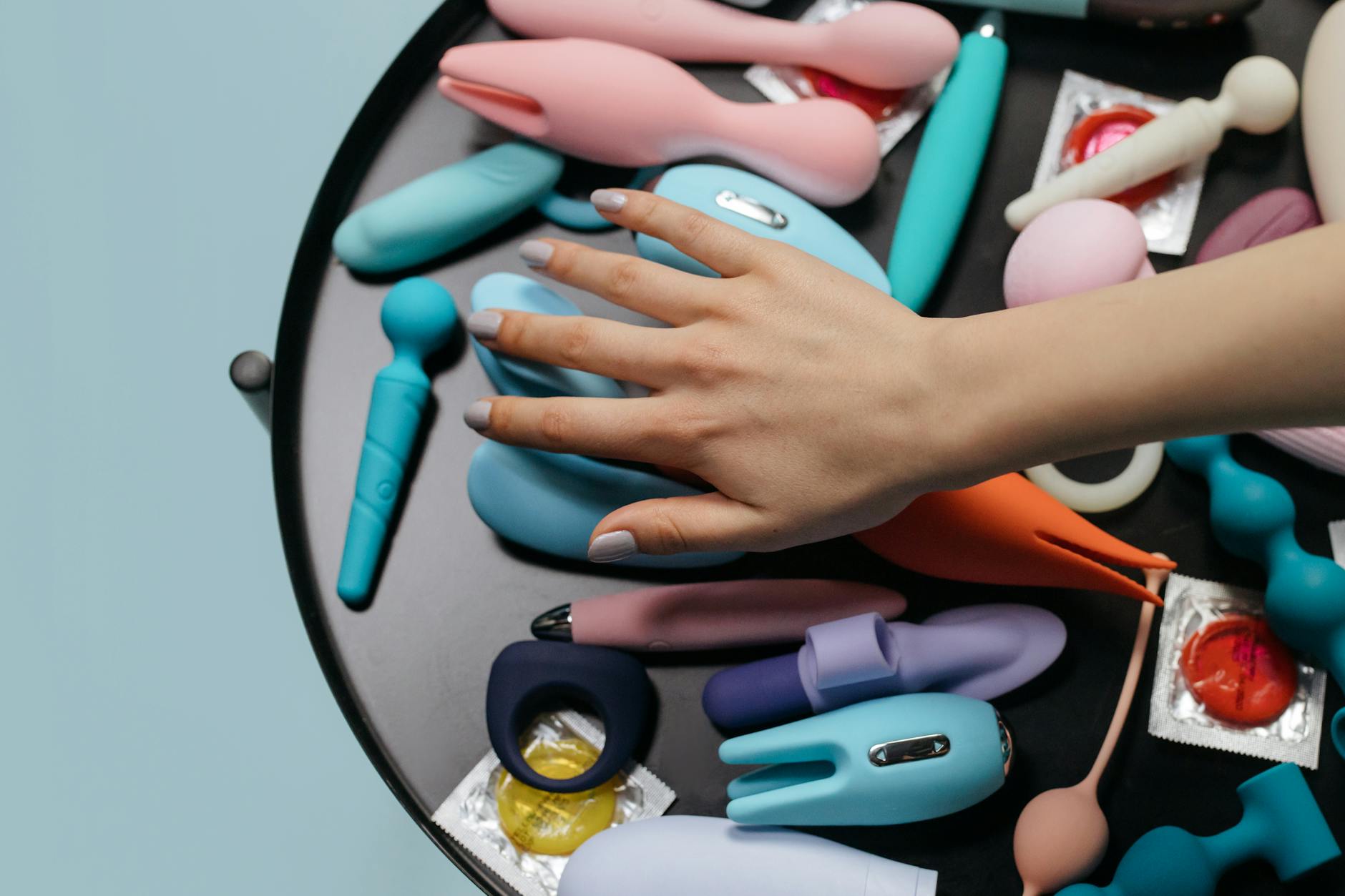
Photo by cottonbro studio on Pexels
The practical setup that works
Start by naming it explicitly. Tell your partner: "I'm going to use the lemon vibrator while we're getting started. This isn't about you taking too long. It's about both of us getting what we need at our own pace." That conversation matters because it removes the shame.
Then, set the stage. Dim the lights. Take off pressure. Make it clear that there's nowhere you both need to be except here. The slower-arousing partner should feel permission to focus on their own body without performing. The faster-arousing partner should feel free to enjoy the vibrator without guilt.
Start with external touch. The partner using the lemon vibrator can begin at a lower intensity level while their partner touches them elsewhere. This creates layers of sensation. Start the lemon vibrator on pattern 1 or 2 (usually the lowest settings), not maximum. You're building, not jumping to the peak.
The slower-arousing partner can touch, kiss, or observe. All of these are valid. If they want to join in with their own pleasure, great. If they want to focus on watching their partner and let their own arousal build, that works too. No script.
Once you feel the slower partner's arousal building (increased breathing, more responsive touch, physical signals you already recognize), start transitioning. The faster-arousing partner might keep the lemon vibrator going while you move into other forms of touch. Or one of you might pause to refocus on each other without the toy. The whole point is that you're now moving together instead of waiting.
Why patterns matter more than intensity
Most people assume intensity is what makes a toy feel good. Actually, it's rhythm and pattern. The Lem vibrator comes with different pulse patterns, and this is where the magic happens. Patterns engage the nervous system differently than constant vibration. They create anticipation.
When you're using the lemon vibrator to bridge an arousal gap, cycling through patterns can actually slow things down in a good way. It keeps attention focused. It prevents the faster-arousing partner from hitting peak stimulation too early. And it gives the slower partner more time to build without anyone feeling like they're lagging.
Experiment with this. Try pattern 3 for two minutes, then switch to pattern 1. Notice how changing the rhythm changes what you feel and when. This isn't overthinking it. It's actually a way to stay present instead of zoning out.
The emotional part (which is actually everything)
Using a lemon vibrator together works best when both partners genuinely want it to. Not because someone convinced the other. Not because anyone's trying to fix a "problem." But because you're both choosing pleasure and connection.
If your partner is resistant to introducing a toy, that's information. It usually means one of three things: they feel insecure about their own ability to please you, they're uncomfortable with toys in general, or they don't feel safe enough to explore new territory with you. None of these are solved by just adding a toy anyway.
What does help is a conversation. Share what you actually need: more time together without pressure, more pleasure for both of you, more novelty or play. Then ask what they need to feel comfortable. Maybe they need to start by just watching. Maybe they want to use the toy themselves first before incorporating it into partnered sex. Maybe they want to talk more about why they're hesitant.
The lemon vibrator is a tool, not a solution to disconnection. But when the foundation is there, a clitoral vibrator can absolutely transform how you experience arousal together.
When to bring this up
Not during sex. That's when vulnerability is highest and defensiveness is triggered most easily. Have this conversation outside the bedroom. Over tea. During a walk. When you're both calm and have time.
Frame it as something you want to try together, not something your partner needs to do differently. "I've been curious about the lemon clitoral vibrator, and I think it might feel good for us to explore together" lands differently than "You take too long to get turned on, so we need a solution."
If they say no, that's real information too. Maybe they need more time. Maybe they'd rather try something else. Maybe this particular approach isn't right for your relationship. Respect that. The goal isn't forcing a tool into your sex life. It's building shared pleasure and genuine connection.
What changes when this actually works
When arousal mismatches stop being a source of friction, entire dynamics shift. Sex becomes something you both actually want to show up for instead of something fraught with timing anxiety. The slower-arousing partner stops feeling broken. The faster-arousing partner stops feeling rejected. You start meeting each other's actual needs instead of fighting against your wiring.
Pleasure becomes shared rather than transactional. And that's when real intimacy shows up.
FAQ
Can using a vibrator make my partner feel like I don't need them?
No. A lemon vibrator doesn't replace your partner. It gives you both permission to experience pleasure without shame or performance pressure. Most partners actually find it hotter to watch their partner feel good than threatening. If your partner does feel threatened, that's worth exploring together. It usually points to something underneath about insecurity or disconnection that a toy can't fix anyway.
How long should I use the vibrator before we transition to partnered sex?
There's no rule. Some people need five minutes. Some need twenty. The goal isn't a specific duration. It's synchrony. When you both feel aroused and present, you transition. Could be ten minutes, could be thirty. Let your bodies tell you.
What if my partner wants to use a vibrator too and we're both using the Lem simultaneously?
That's genuinely connecting if that's what you both want. You're creating a shared experience of pleasure rather than taking turns. Some couples find this incredibly intimate. Others prefer that one person is receiving while the other is more active. There's no right way.
Does using a vibrator change how orgasm feels with a partner?
It can. Some people find their orgasms more intense. Some feel more present because there's no performance pressure. Some need a moment to transition from vibrator stimulation to partnered touch. These are all normal. Your body will adjust and figure out what works.
What if the slower-arousing partner is actually me?
Then the lemon vibrator might help your partner feel good while you take the time you need. But also check in with yourself. Are you actually slower to arouse, or do you feel pressured to be ready before your body is? Are you stressed? Disconnected? On medication that affects arousal? Those are worth naming because they might need a different kind of attention.
How do I bring this up without making my partner feel broken?
Frame it around what you want, not what's wrong with them. "I'd love to explore something new together" is different from "Your arousal is too slow." And mean it. If you bring this up with resentment underneath, your partner will feel it regardless of your words.
Remember: arousal differences are not a flaw in either partner. They're just a difference that needs navigation, and that's completely normal in long-term relationships. A lemon vibrator is just one way to navigate it with pleasure instead of pressure.