
When desire stops matching, solo pleasure becomes revolutionary
Let's be real: desire mismatch is one of the sneakiest relationship problems nobody wants to admit. You're still attracted to your partner. They still care about you. But somewhere along the way, sex stopped being on their radar, and now you're caught between your own needs and the guilt of wanting something they don't.
Here's what I see in my practice constantly. One person's libido stays stable or even increases. The other person's drops. Nobody's broken. Nobody's done anything wrong. But the gap between you both keeps growing, and the longer it goes unspoken, the worse it feels.
A lemon vibrator doesn't fix the relationship. But it does something more immediate and radical: it gives you back your body. Your pleasure. Your permission to feel good independently.
Why the gap happens, and why it matters
Desire mismatch isn't random. It usually shows up when one partner is stressed, burnt out, managing health issues, on medications that kill libido, or simply built differently than the other from the start. Sometimes it's all of those at once.
The trap is thinking that if you just wait it out, or try harder, or initiate differently, the desire will come back. Sometimes it does. Often it doesn't without actual intervention. And while you're waiting, your own sexuality gets put on hold. That resentment builds quietly. It poisons the rest of the relationship.
Using a lemon clitoral vibrator independently isn't giving up on your partner. It's honoring your own body while you figure out the bigger conversation.
The permission piece nobody talks about
Most people don't realize that desire mismatch comes with an invisible cost: you stop feeling like you have permission to want sex. Your partner isn't interested, so you internalize that as "I shouldn't want it either." You stop touching yourself. You stop asking. You shrink your own sexuality to match theirs.
Using a lem vibrator or any clitoral vibrator solo is the antidote to that shrinking. It's a statement to yourself: my pleasure matters regardless of whether my partner is in the mood.
When you do this regularly, something shifts. You stop being resentful. You stop taking their disinterest personally. And paradoxically, you often become more attractive to them because you're not radiating desperation and hurt anymore.
How to actually use a lemon vibrator in this context
First, logistics. You need privacy and time that feels like it's actually yours. Not squeezed between work emails and bedtime. Set a real appointment with yourself, even if it's 20 minutes on a Tuesday afternoon. Lock the door. Your pleasure deserves that.
Second, understand what you're doing here. This isn't about replacing your partner or proving a point. You're reconnecting with your own arousal independent of anyone else's. That's the whole goal.
Start without pressure. Don't go into this thinking you have to orgasm. Let your body remember what pleasure feels like on its own terms. Use a water-based lubricant even if you think you don't need it. Wetter means more sensation with a clitoral vibrator, and sensation is what reconnects you to desire.
Experiment with the settings. The Lem has multiple intensity levels for a reason. If you're coming to this after months of no sexual stimulation, start at level 1 or 2. Let your nervous system adjust. You can always turn it up. You can't un-ring the bell if you jump straight to maximum suction and overwhelm your system.
Build a rhythm that feels sustainable. Some people find that weekly solo sessions with a clitoral vibrator keep them grounded. Others prefer 2-3 times weekly. There's no "right" number. The right number is whatever reminds you that your body still works and still deserves pleasure.
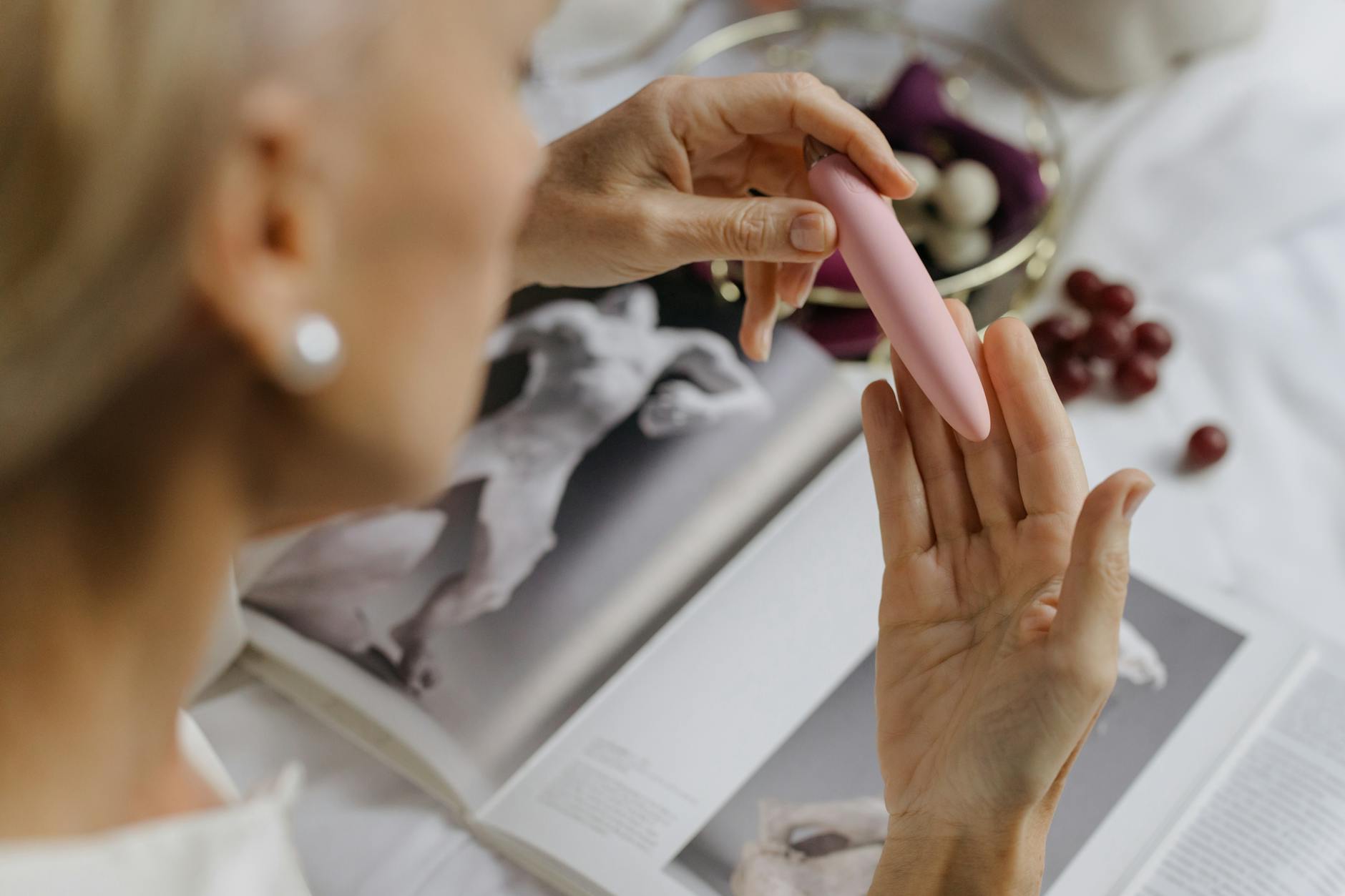
Photo by cottonbro studio on Pexels
The conversation piece is separate, and harder
Using a lemon sexual toy solo gives you back your pleasure. But it doesn't automatically fix the mismatch in your relationship. At some point, that needs a real conversation. Not during sex, not during a fight, but during a calm moment when you can both actually think.
The mistake most people make is turning this conversation into an accusation. "You never want me anymore" goes nowhere. What actually works is separating two different conversations. One is about their desire (or lack of it). The other is about your needs.
Say something like: "I've noticed sex isn't something you're initiating, and I'm wondering what's going on for you." Then listen. Really listen. Often there's stress, health stuff, medication side effects, or just burnout that you didn't know about.
Then, separately: "For me, I need regular sexual release to feel good in my body and in our relationship. I'm taking care of that for myself right now, but I also want to find ways we can connect around this together."
That's not the same as "I'm using toys because you're useless." It's "I'm meeting my own needs, and I also want us to figure this out."
What using a lemon vibrator solo actually solves
Three concrete things change when you start taking your pleasure back:
You stop resenting them for not wanting you. This is the big one. Resentment is the termite of long-term relationships. It eats everything from the inside. When you're not waiting for your partner to fix your sexual needs, you're not angry at them for not doing it.
Your nervous system gets regulated. Chronic sexual frustration doesn't just feel bad emotionally. It literally keeps your stress response activated. Using a clitoral vibrator regularly calms that down. You're genuinely less tense. You sleep better. You're kinder to everyone around you.
You show up as your actual self, not a smaller version. When you're not suppressing your sexuality, you occupy more space. You're more confident, more present, more interesting. Sometimes that actually does spark something in your partner. Not always. But you're not smaller either way.
If this is part of a bigger pattern
Desire mismatch that lasts more than a few months usually needs actual help. A sex therapist or couples counselor trained in this specific issue can move things faster than you alone can. That's not failure. That's actually the smartest move.
In the meantime, using a lem vibrator or any clitoral vibrator keeps you tethered to yourself. It reminds your body that pleasure is possible, that you're still here, that this part of you didn't disappear just because your partner's did.
Your pleasure isn't selfish. It's survival.
People also ask
Is it normal to use a lemon clitoral vibrator when your partner doesn't want sex?
Completely normal. Millions of people in long-term relationships with desire mismatches use vibrators independently. It's not infidelity. It's not giving up on your partner. It's maintaining your own sexual health while you both navigate a difficult transition.
Will using a lemon vibrator make my partner less interested in sex with me?
The opposite usually happens. When you're not radiating resentment and sexual frustration, you're actually more attractive. You're relaxed. You're not desperately waiting for them to want you. That paradoxically often makes connection easier. And if it doesn't, at least you're not sacrificing your own pleasure in the process.
How often should I use a lemon sexual toy if my partner has lost interest?
There's no set schedule. Some people find weekly use keeps them grounded. Others prefer 2-3 times weekly. The only rule is consistency. Your nervous system needs regular regulation. Think of it like exercise, not performance.
Should I tell my partner I'm using a clitoral vibrator?
That depends on your relationship and your comfort level. Some couples find that honesty about this actually opens the conversation about desire mismatch. Others prefer to keep solo pleasure private. Both are valid. But if you're keeping it secret because of shame, that's worth examining.
Can using a lemon vibrator help me stay connected to my partner during low-libido periods?
Yes, but in an indirect way. It keeps you grounded in your own body, which means you're not looking to your partner to fix that for you. You're less needy, which paradoxically creates more space for actual connection. And sometimes maintaining your own pleasure reminds you why you wanted this person in the first place.
What if my partner feels threatened by me using a lemon clitoral vibrator?
That's a conversation worth having early. Often the threat comes from a misunderstanding. They might think it means you're not attracted to them anymore, or that solo pleasure is competition. You can gently clarify: it's not about replacing them. It's about maintaining your own sexual health while you both figure out the bigger mismatch.
The bottom line
Desire mismatch in long-term relationships is real, and it's painful. But your sexuality doesn't have to go dormant while you wait for things to change. Using a lemon vibrator independently is an act of self-preservation. It keeps you connected to your body, regulated in your nervous system, and honestly more attractive to your partner because you're not waiting for them to complete you.
If you're ready to start having conversations about this, reach out to get support. Sometimes these patterns need more than solo pleasure to shift. They need real help. And there's no shame in asking for it.
Your pleasure matters. Even when your partner's doesn't. Especially then.