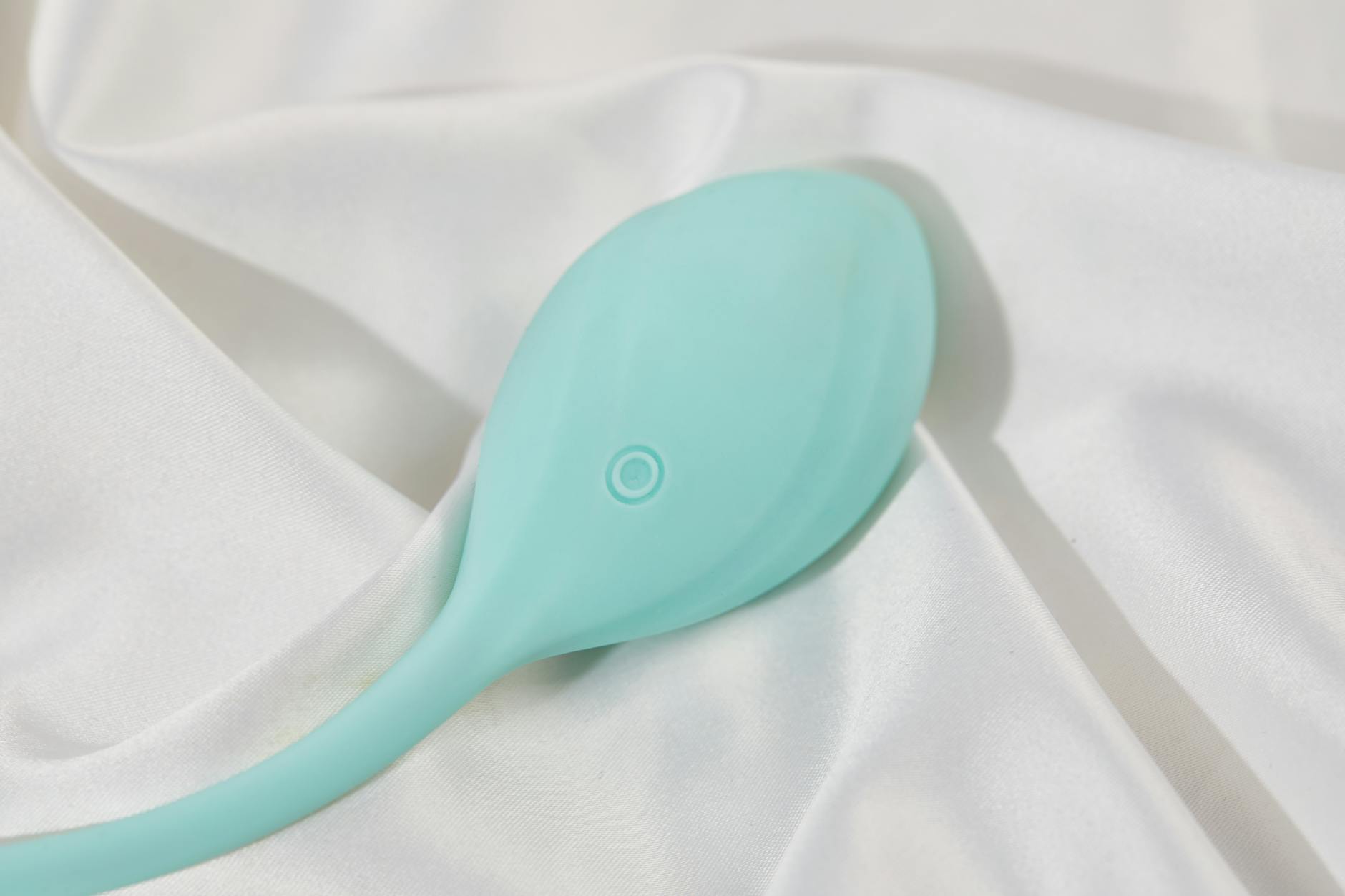
Let's start with what you need to know
Being afraid of your own orgasm sounds counterintuitive, right? But it's not rare. I work with couples all the time where one partner has developed a genuine fear or avoidance around climax. It shows up as tension, stopping mid-way, dissociating, or simply shutting down when pleasure gets close. And it almost always traces back to one of a few things: past trauma, religious conditioning, relationship conflict, or a kind of meta-anxiety where you're anxious about being anxious.
The good news: this is reversible. A lemon vibrator isn't a cure, but it's a remarkable tool for rebuilding the conversation between your brain and your body because it removes the performance pressure that usually makes the fear worse.
Why fear of orgasm happens (and why it's not your fault)
Your nervous system is doing exactly what it was trained to do. If you grew up in a religious environment where pleasure was shameful, your body learned to interrupt pleasure as a safety mechanism. If you've experienced trauma, your nervous system learned to protect you by cutting off sensation. If you're in a conflicted relationship, your body might be refusing pleasure as a subconscious way of maintaining emotional distance.
None of this is weakness. It's adaptation. Your body was trying to keep you safe.
The neuroscience piece matters here. Orgasm requires a shift from sympathetic nervous system (fight-or-flight) to parasympathetic (rest-and-digest). When you're afraid of orgasm, you're stuck in a loop where the approach triggers the threat response. Your body tenses. Blood flow decreases. Sensation dampens. Then you feel worse because you can't relax, which triggers more fear. It's a feedback loop.
A lemon clitoral vibrator can interrupt this loop because it removes decision-making from the equation. You're not performing for anyone. You're not managing another person's expectations. You're just receiving sensations in a very specific way.
The nervous system reset: why the Lem works differently
Most vibrators work through broad vibration patterns that require you to build intensity gradually. That works fine if you're not afraid. But if you are, you need something that gives you granular control and, more importantly, a sensory experience that feels safe and predictable.
A lemon sucker, specifically, delivers suction rather than vibration. This matters neurologically. Suction creates a sustained pressure that activates different nerve pathways than vibration does. It feels less invasive, more like a gentle drawing sensation. For people working through orgasm anxiety, this is huge because it reduces the "overwhelming sensation" element that often triggers the fear response.
Here's what I typically recommend to clients: start with the lowest setting on a lemon vibrator, and your only job is to notice sensation without chasing outcome. Not "try to come." Not "see if this works." Just "what does this feel like?" That shift from goal-orientation to sensation-awareness is where the nervous system actually starts to reset.
A four-step framework for using a clitoral vibrator through orgasm fear
Step 1: Solo exploration, no agenda.
Your first several sessions should be completely private and completely pressure-free. Start clothed or partially clothed, if that feels safer. Place a lemon vibrator near (not on) your body. Turn it on the lowest setting. The goal is not arousal or pleasure. The goal is noticing: What does this feel like? Is it uncomfortable? Is it interesting? Am I bracing for something?
Do this for 3-5 minutes, then stop. No climax expected, no "success" metric. You're training your nervous system that sensations can start and stop safely.
Step 2: Build time slowly.
Once the vibrator itself feels familiar, extend sessions to 5-10 minutes. You can move from clothed to more direct contact if you want to. Still no pressure to reach any destination. If you notice fear rising, pause. Notice it. Then resume or stop, depending on what your body needs. This teaches your nervous system that you have agency. You can start. You can pause. You control the rhythm.
Step 3: Work with breath.
When people are anxious about orgasm, they hold their breath. Breathing becomes shallow. This keeps you in sympathetic mode. So during your sessions, focus on deepening breath. Inhale for a count of 4, exhale for 5-6. This is not meditation-speak. This is a direct nervous system intervention. Longer exhales activate the parasympathetic response. Do this for 2-3 minutes before using the lemon vibrator, then maintain it during.
Step 4: Track what shifts, not what doesn't happen yet.
Instead of monitoring whether you're getting close to orgasm (which is outcome-focused and fear-perpetuating), track what's changing. Can you stay present for 5 minutes instead of 3? Can you feel pleasure without immediately tensing? Can you breathe and feel sensation at the same time? These micro-shifts are what reset your nervous system.
When to involve your partner (and how)
If you're in a relationship, there's often a secondary layer of anxiety: performance anxiety, or the fear that your partner will feel rejected or disconnected. This is real and worth naming directly.
Here's what I tell couples: introduce the lemon vibrator as part of collaborative exploration, not as a workaround for a problem. Frame it as "I want to rebuild my relationship with my own pleasure, and I'd like you there" rather than "I'm broken and this might fix it."
Your partner can be present in the room. They can hold space. They don't touch. They don't suggest improvements. Their job is just to normalize the process and, later, to understand that rebuilding pleasure takes time.
If you move to partnered use later, start exactly the same way: low setting, no agenda. Many people find that having a partner present actually reduces some fear because you're not alone in addressing something that felt shameful.
The role of therapy alongside tools
A lemon vibrator is an excellent practical tool, but if your orgasm fear connects to trauma, deep religious conditioning, or ongoing relationship conflict, you need a therapist too. A vibrator retrains your body. A therapist reframes your mind. You need both.
Specifically, look for a sex-positive therapist trained in somatic work or trauma-informed care. They can help you identify where the fear is actually rooted and give you tools that go beyond sensation.
Common questions that come up
People often ask: "How long until I stop being afraid?" Honestly, weeks to months, depending on the depth of the fear and what caused it. But the shift often starts within 2-3 weeks of consistent, low-pressure exploration. You'll notice less bracing. More curiosity. That's the nervous system shifting.
Another: "What if I can't relax even with a vibrator?" That's information, not failure. It tells you that your nervous system needs more foundational work before you layer in sensation. That might mean breathing practice, journaling about the fear, or therapy before trying tools.
And: "Is this going to be weird with my partner watching?" Probably at first. Then probably not. Humans are adaptable.
Why this matters beyond the bedroom
Here's what I know from decades of working with couples: the ability to receive pleasure without guilt or fear changes something fundamental about how you move through the world. It builds self-trust. It reinforces that your body belongs to you. It shifts you from a mindset of scarcity ("I'm broken") to abundance ("I'm learning").
Orgasm anxiety often shows up alongside other patterns where you minimize your own needs or override your own signals. Rebuilding pleasure with a tool like a lemon vibrator, at your own pace, in your own space, teaches you to listen to your body again. That skill transfers everywhere.
Moving forward
Your pleasure matters. Not eventually. Not when you've done enough therapy. Now. The fact that you're considering using a clitoral vibrator to rebuild your relationship with sensation means you're already prioritizing yourself, and that's the first step.
Start small. Track curiosity, not outcomes. Breathe. Give your nervous system permission to move slowly. And if you're in a relationship, name the process clearly so your partner understands this is about healing, not rejection.
If you want to explore this more deeply, consider reaching out to a therapist who specializes in sexuality and relationships. And remember: fear of orgasm isn't permanent. It's your nervous system's way of protecting you. With patience and the right tools, that protection can gradually shift back into pleasure.
People also ask
What causes a sudden fear of orgasm in a long-term relationship?
Often, it's relational. Unresolved conflict, resentment, or emotional disconnection can cause your nervous system to subconsciously protect you by withdrawing pleasure. Sometimes it's also stress or burnout in other areas of life. Your body isn't being stubborn; it's telling you something's wrong. That's a sign you might need couples therapy alongside personal exploration.
Can you have an orgasm while feeling anxious about it?
Sometimes, but it's difficult and often unsatisfying. The anxiety keeps your nervous system partially in fight-or-flight, which dampens sensation and pleasure. That's why the slow, sensation-focused approach with a lemon vibrator works better than pushing through the anxiety.
How is orgasm anxiety different from difficulty reaching orgasm?
Difficulty reaching orgasm is usually neutral; you're not afraid, you're just not getting there. Orgasm anxiety is active fear. It might show up as stopping mid-arousal, tensing, dissociating, or feeling shame. If you're not sure which you have, a therapist can help clarify.
Should I use a lemon vibrator alone or with a partner first?
Always alone first. Building safety and trust with your own body comes before adding another person to the equation. Once you've had several solo sessions where you feel calmer and more present, then you can consider partnered exploration if you want to.
Is orgasm anxiety a sign I'm not attracted to my partner?
Not necessarily. It can be, but more often it's a nervous system issue, a shame response, or relational conflict. Before you jump to attraction, explore whether there's unresolved tension, communication issues, or past trauma at play. Those are more common culprits.
How do I know if therapy would help alongside using a vibrator?
If your orgasm fear is connected to past trauma, religious shame, or ongoing relationship conflict, therapy is essential. A vibrator addresses the body; therapy addresses the mind and the relational pattern. You'll heal faster with both.