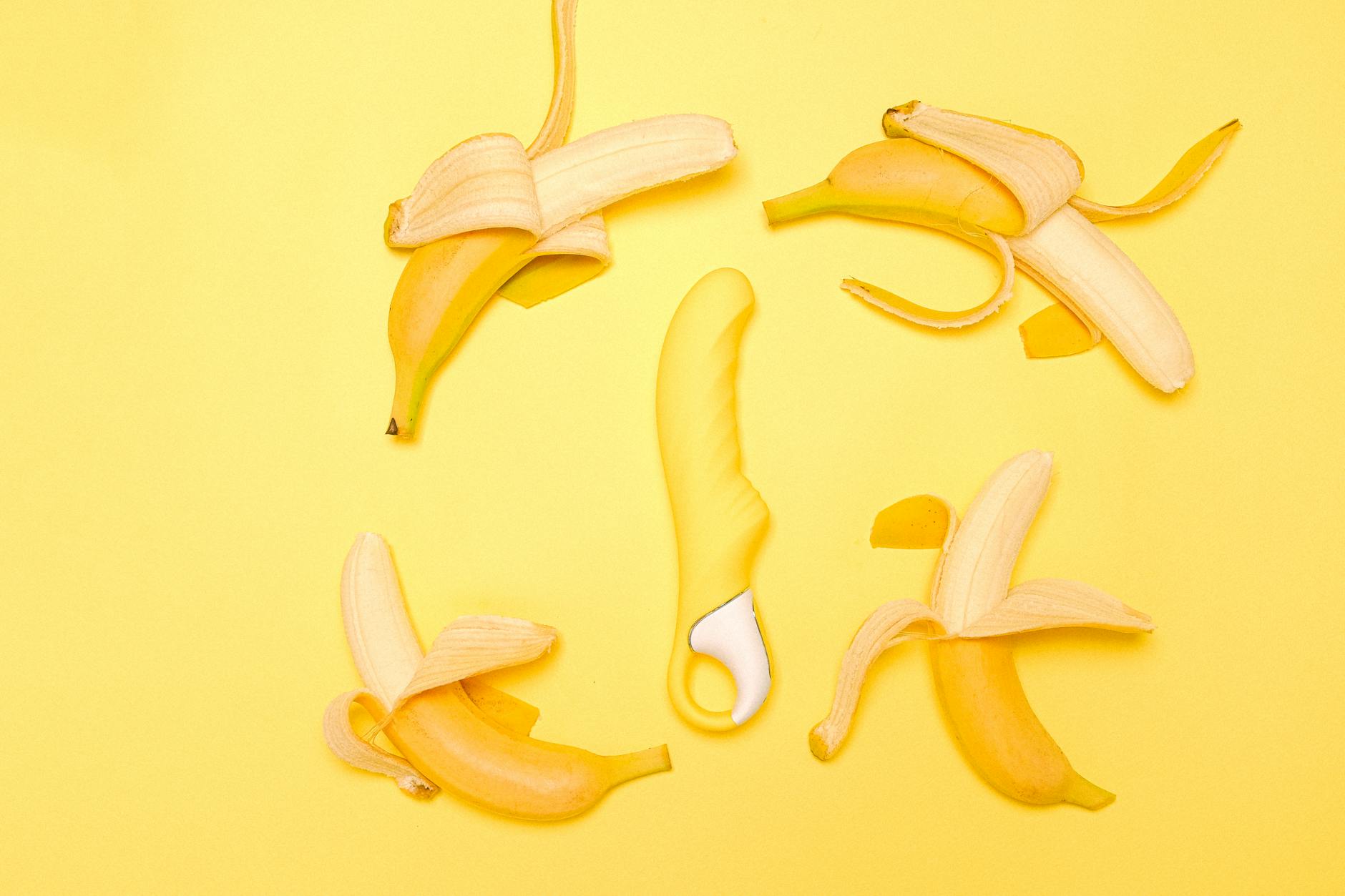
Let's be real about clitoral numbing
You went hard. You came. You kept going. And somewhere in that loop, the sensation started fading. Your clit felt less responsive, less alive, less capable of delivering the big finish. So you turned up the intensity. Then higher. Now you're stuck in a loop where only maximum power produces any feeling at all, and even then it's muted.
This is clitoral desensitization, and it's wildly common. You're not broken. Your nerve endings aren't permanently damaged. What happened is your clit adapted to heavy-handed stimulation the same way your hand goes numb after holding a vibrator for 45 minutes straight.
The good news: it's reversible.
What actually happens when your clit goes numb
Your clitoris has roughly 8,000 nerve endings concentrated in a space the size of a pea. That density is why it's so capable of intense sensation. But that same density makes it vulnerable to overstimulation.
When you use high-intensity vibration repeatedly, the nerve endings adapt. They stop firing at low thresholds. You need more stimulation to get the same response. The technical term is "habituation," but what it feels like is frustration.
The tricky part: it's not actually the nerve endings dying. It's the neural signals getting dampened. Think of it like turning up the volume on your phone so high for so long that normal volume sounds silent. The speaker works fine. Your ears just adjusted to the noise.
That's also why the fix works. You're not rebuilding anything. You're retraining your nervous system to respond to softer input.
Why lemon vibrators work better for recovery
Most people think they need to avoid vibrators entirely during recovery. They don't. What they need is a vibrator that lets them control intensity with precision.
The lemon vibrator (and similar clitoral suction tools) are ideal for desensitization recovery because they offer something traditional vibrators often don't: graduated intensity patterns and the ability to start genuinely low.
Here's the difference. A standard vibrator's lowest setting is often still "medium" in absolute terms. It's fine for someone with normal sensitivity, but if your clit has been hammered by years of high intensity, low-speed traditional vibration still feels like a starting point that's too high.
Lemon clitoral vibrators work differently. They use air-pulse technology instead of pure vibration. The sensation is gentler, more diffuse, and easier to modulate. You can literally start at pattern 1 out of 5, and pattern 1 feels like a whisper compared to even a traditional vibrator's lowest setting.
This matters because recovery requires you to start so low that your clit goes, "Oh. That's pleasant." Not "I can feel something." Pleasant.
The four-week reset protocol
Don't rush this. Recovery takes time because you're retraining your nervous system, not forcing it. Here's the framework I recommend to clients.
Week one: Sensation mapping. Use your lemon vibrator at pattern 1 for 3-5 minutes, three times a week. Don't aim for orgasm. Aim for "this feels interesting." You're checking in with what your clit can actually sense right now, without expectation attached. Keep notes on what patterns feel good versus neutral.
Week two: Building response. Move to pattern 2 for the same sessions, same frequency. You might notice sensation starting to sharpen. You might not. Either is normal. If pattern 2 feels too strong, stay on pattern 1 for another week. There's no timeline except your own.
Week three: Patience and texture. Introduce variety without escalating. Use pattern 2 but vary the angle, pressure, and duration. Some sessions do circles. Others do up-and-down motion. Some stay completely still. You're teaching your clit that stimulation is nuanced, not just "turned up to maximum."
Week four and beyond: Orgasm reintroduction. Once you can feel genuine pleasure at pattern 2 without having to chase it, you can aim for orgasm again. Start with pattern 2, move to pattern 3 only if you need it to finish. Many people find they can come at lower intensities than they ever could before. That's the point.
The uncomfortable truth about desensitization
Recovery works. But it requires one thing that makes most people uncomfortable: stopping what feels broken and going backward to what feels almost nothing.
That week one where you're using pattern 1 for five minutes and getting almost no sensation? That's the reset. You're neurologically boring your clit back to baseline sensitivity. It feels frustrating because there's no payoff yet. But the payoff comes in week three when pattern 2 suddenly feels amazing instead of meh.
You also have to resist the urge to cheat. If you're in week two and you sneak a session on pattern 5, you reset the clock. Not permanently, but you interrupt the adaptation process. It's worth protecting the four weeks to actually feel different after.
What to avoid during recovery
Beyond the obvious (don't escalate intensity), a few specific things sabotage recovery.
Don't use deathgrip technique if you're also using a vibrator. If your clit is desensitized, the temptation is to add manual pressure to help the vibrator along. That adds more of the same overstimulation. Light touch, or no touch, works better.
Don't combine with alcohol or substances that dull sensation further. Anything that decreases your ability to feel already-faint sensations works against recovery.
Don't use on other partners during this window if you're in a relationship, unless you're explicitly choosing non-partnered sessions for recovery and keeping partnered time separate. The mental load of performing pleasure while your body isn't cooperating creates stress that neurologically works against sensitivity rebound.
How partners fit into recovery
If you're recovering from desensitization and you have a partner, you have options. Neither is wrong.
Option one: Take a break from partnered stimulation during the four-week reset. Solo sessions with your lemon vibrator let you recalibrate without any mental load. Many people find this speeds recovery because there's zero performance pressure.
Option two: Include your partner but reframe it. Tell them explicitly: "I'm rebuilding sensitivity. That means we're going slower than usual, and I'm aiming for sensation first, orgasm second." If they're in, great. If they're confused by slower-tempo sex, that's data worth understanding. Sometimes desensitization recovery reveals relationship dynamics worth talking through separately.
The worst option is pretending everything is fine and white-knuckling through sessions where you don't feel much. That's just repeating the pattern that broke things in the first place.
When to see someone
If you're six weeks into recovery and sensation isn't improving, there might be something else going on. Certain medications (SSRIs, some antihistamines) can dull clitoral sensation. Hormonal shifts can too. A conversation with your doctor or a sex therapist can rule out medical causes and sometimes point to solutions you hadn't considered.
Also talk to someone if desensitization is wrapped up in anxiety about your body or your sexuality. Sometimes the numbing is literally nervous system numbing from stress, not overstimulation. Different problem, different solution.
Lemon vibrators and clitoral vibrators are tools, not magic. But they're excellent tools when you're using them strategically. If you've been locked in the high-intensity cycle, a reset is possible. You'll feel better on the other side.
FAQ
Can I use a regular vibrator during clitoral desensitization recovery?
Technically yes, but it's harder. Standard vibrators don't modulate as smoothly at low intensities. Your best bet is a lemon vibrator or similar air-pulse device that lets you start genuinely low. If you're using a traditional vibrator, commit to not escalating beyond pattern 2 for the full four weeks, even if it feels pointless. The pointlessness is the point.
How long does it actually take to recover clitoral sensitivity?
Most people see noticeable improvement in 3-4 weeks and full recovery in 6-8 weeks. Some take longer if they've been overusing high-intensity toys for years. The timeline also depends on whether you're following the protocol strictly or negotiating with yourself about intensity. Stricter adherence equals faster recovery.
Is clitoral desensitization permanent?
No. Your nerve endings don't die. They adapt, which means they can re-adapt. It's the same mechanism as hand numbness from holding a vibrator. Stop the stimulus, let the nervous system recalibrate, and sensation returns. The recovery window is usually weeks to a couple of months, not years.
Can hormonal birth control cause clitoral desensitization too?
Not directly, but hormonal changes can reduce clitoral sensitivity for other reasons. If you started experiencing numbness after changing birth control, that's worth exploring with your doctor. You might need a different method. It's separate from vibrator-induced desensitization, but the reset protocol still helps.
What if my partner thinks I'm avoiding them during recovery?
Talk about it before you start. Say something like: "My clit isn't responding like it usually does, and I want to reset it. That means solo time for a few weeks. It's not about you. It's about rebuilding my own sensitivity so I can actually enjoy partnered time again." Most partners understand recovery when they know it's temporary and intentional. If they don't, that's a relationship conversation worth having.
Is it normal to feel frustrated during the reset?
Completely normal. You're used to strong sensation and intensity. Week one and two feel boring and ineffective. That boredom is literally your nervous system downregulating. It feels bad because your baseline is high. Stick with it anyway. Week three is where things shift.