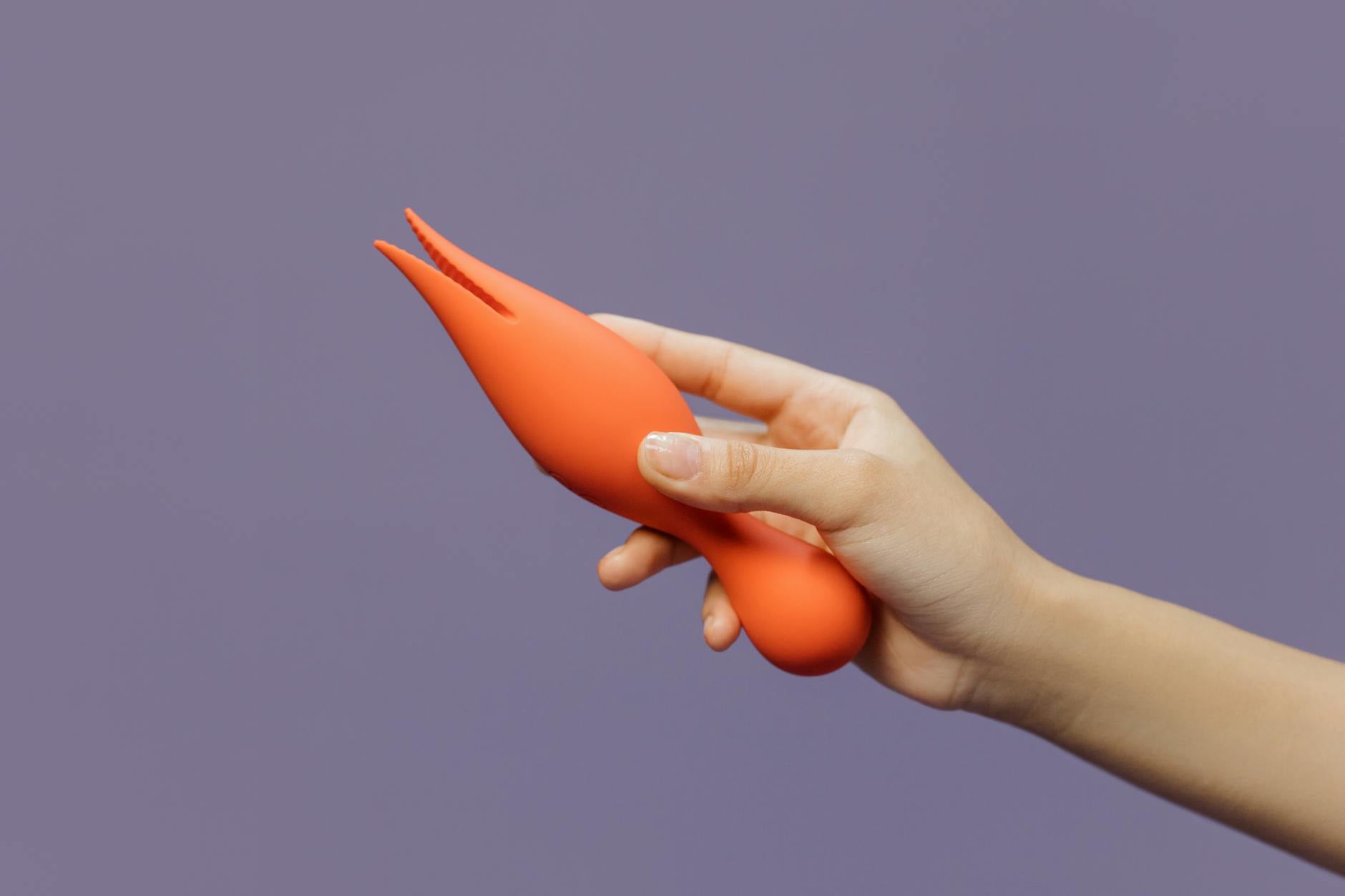
Here's the split that nobody talks about
You can have incredibly satisfying orgasms alone. You can also have wonderful partnered sex. And somehow those two things can feel like they're happening in completely different bodies. It's weirdly common, and weirdly isolating when you're the one experiencing it.
The disconnect usually shows up like this: solo, you know exactly what you need, you can build intensity however you want, and the orgasm comes easily. With a partner, you're managing someone else's presence, their rhythm, their expectations, and suddenly your body stops cooperating the way it does when you're alone. Or the opposite happens. Partnered sex feels connected and easy, but when you're solo, you can't recreate that sense of intimacy and end up feeling like you're just going through mechanics.
The gap between solo and partnered pleasure isn't a failure of either one. It's usually a sign that you're not fully integrating the two. And a lemon clitoral vibrator can actually be the bridge.
Why solo and partnered sex can feel like separate worlds
There are actually three things happening here, not one.
The attention split. When you're alone, all your focus is internal. Your body, your breath, your sensation. When someone else is in the room, you're automatically dividing attention outward. You're tracking their pleasure, their presence, whether they're getting what they need. That cognitive load doesn't just feel distracting. It literally changes your nervous system state. You shift from parasympathetic (rest, digest, get off) to something more sympathetic (alert, watching, managed). Different nervous system state, different body response.
The control architecture. Solo, you set the pace, the intensity, the pattern, the duration. You can spend three minutes on one pattern or twenty. With a partner, that control is shared or handed over. Even if your partner is genuinely responsive to what you want, you're negotiating it in real time. That loss of unilateral control can actually block sensation for a lot of people. Your brain is waiting for permission that you've already given yourself.
The intimacy texture. Solo pleasure is you and your body. Partnered sex has another person's presence woven into it. For some people, that presence is deeply erotic and dissolves resistance. For others, it creates self-consciousness or a sense of performing, even when the partner is loving and attentive. Neither is wrong. They're just different nervous system contexts.
What a lemon vibrator does to close the gap
A good clitoral vibrator, especially something like The Lem, actually gives you back control while you're partnered. That's the magic.
When you introduce a lemon vibrator into partnered sex, you're not outsourcing your pleasure to an external tool. You're anchoring it. You're saying: this is my sensation, this is my pace, this is my orgasm to have. Your partner can be involved. They can watch, they can touch you elsewhere, they can create that emotional intimacy while the vibrator handles the mechanics of clitoral sensation. That separation of roles actually lets your nervous system relax. You stop trying to coordinate your body's response with someone else's presence.
The vibrator becomes the through-line between solo and partnered. When you use it alone, you build a specific skill with it. A favorite pattern, a preferred intensity progression, a rhythm that works for your body. Then when you use it with a partner, you're not learning a new pleasure language. You're inviting them into one you already know. That consistency across contexts is what starts to integrate the two.
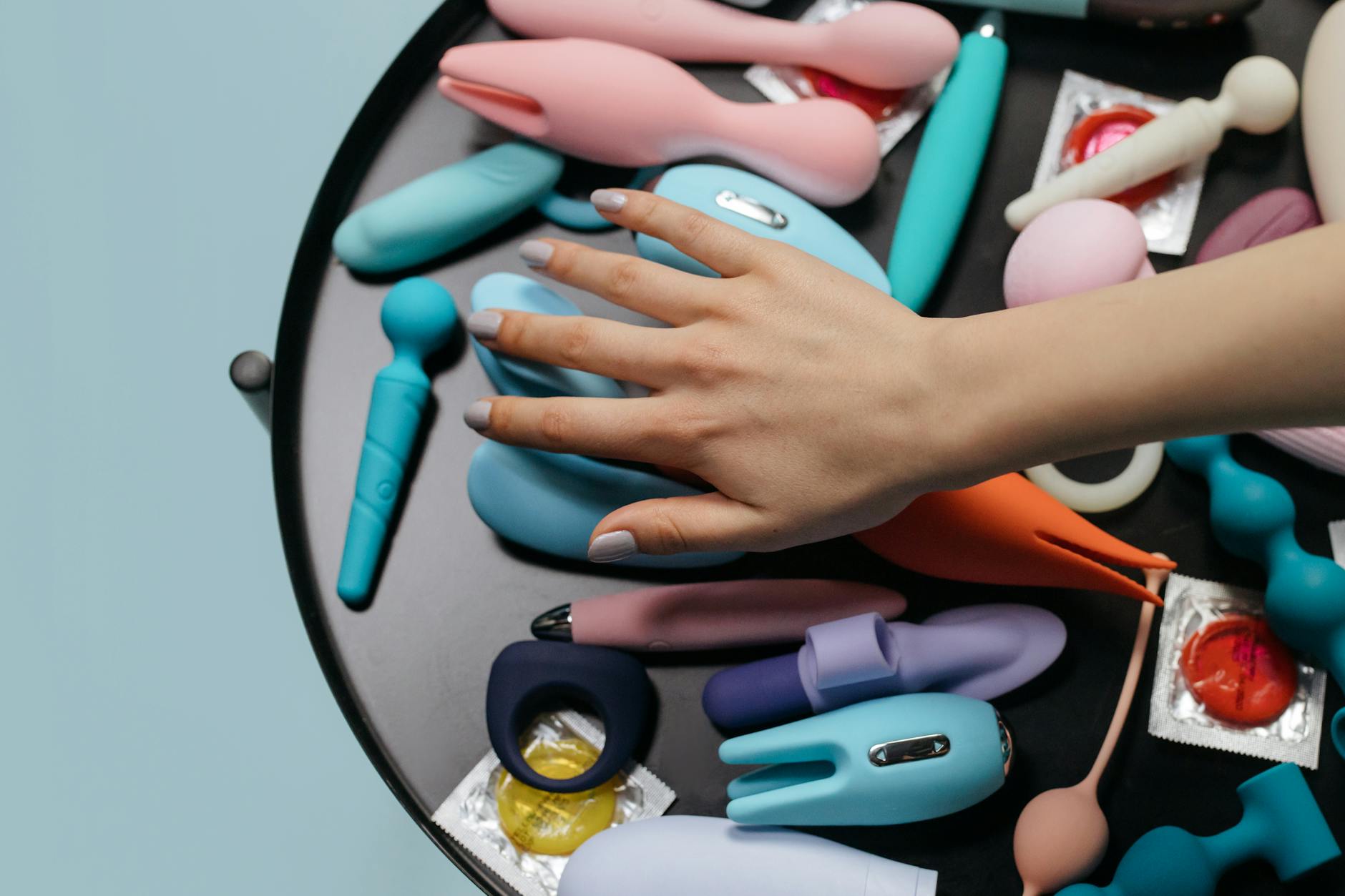
Photo by cottonbro studio on Pexels
The practical setup that actually works
There are a few ways to do this, depending on what your partnership looks like and what you want the vibrator's role to be.
Solo foundation first. Before you bring a lemon vibrator into partnered sex, spend time with it alone. I'm talking three to five solo sessions where you're just learning your body's response. What pattern gets you to the edge fastest. What intensity lets you stay there without coming immediately. How long your typical session takes. What breathing rhythm pairs well with it. This isn't about optimization. It's about creating a baseline of solo competence. You want to know this tool deeply before you're using it while managing someone else's presence.
The introduction conversation. Tell your partner what you're planning before you do it. Not in a clinical way. "I've been using this vibrator solo and I'd like to use it when we're together too. It helps me relax and get there more easily. Want to try it together?" Simple. No apology. No explanation of what's wrong with your body or sex with them. Just that it's something you want to add.
The first session. Start with your partner not directly involved. You initiate partnered sex, and when you're ready for clitoral stimulation, you introduce the lemon vibrator yourself while your partner focuses on the rest of your body. Penetration, kissing, touching elsewhere, conversation. Let them be present with everything except the clitoral work. This gives you the integrated experience without the control split. You're still managing the vibrator's role while receiving their presence.
Building from there. After a few sessions where you're handling the vibrator, you can offer to let your partner hold it or guide its placement. Or not. Some people prefer to keep that control. Either way is fine. The point is you're experimenting with the combination, not handing off responsibility for your own orgasm.
The mental shift that makes it click
Here's the thing that changes the game: you have to stop thinking of the vibrator as a substitute for your partner's touch and start thinking of it as an extension of your own capacity.
When you frame it as "I need this because partnered sex isn't working," it loads the vibrator with failure. It becomes proof that something's wrong with the partnership or your body. But when you frame it as "This is something I want to add because it lets me bring my full pleasure to this partnership," it becomes collaborative. Your partner isn't being replaced. They're being invited into a fuller version of your sexuality.
This shift is especially important if there's any history of you feeling like your pleasure is a burden on your partner. A vibrator isn't the solution to that dynamic, but it can help. It signals that you're taking ownership of your own sensation. That you're not waiting for your partner to fix you or unlock something. You're bringing something to the table.
Over time, using a lemon clitoral vibrator in both solo and partnered contexts actually rewires your nervous system. Your body starts to recognize that pleasure is pleasure, whether you're alone or together. The intensity, the quality of orgasm, the ease of getting there starts to level out. You're not chasing two completely different versions of sensation anymore.
When the disconnect runs deeper
If solo pleasure works fine but partnered sex feels fundamentally blocked, or vice versa, a vibrator helps but it's not the full picture. There's often something else happening underneath.
It might be trust. It might be self-consciousness. It might be anxiety or attachment patterns that show up differently depending on whether you're alone or with someone. A vibrator is a tool for sensation. It's not a tool for processing why your body shuts down in one context and opens in another.
If the disconnect feels tied to emotional intimacy or a sense of disconnection from your partner, that's relationship territory. A sex therapist or couples counselor can help in ways a vibrator can't. But a lemon vibrator can be part of the healing. It's concrete proof that solo pleasure is possible, which sometimes opens the door to exploring what's actually blocking the partnered version.
How to use The Lem across both contexts
If you're starting with a lem clitoral vibrator specifically, here's what you need to know.
The Lem's suction pattern is gentler than traditional vibration, which means it works well for building a solo routine. You can use patterns 1 through 3 for longer, more meditative sessions. Patterns 5 and 6 are your finishing patterns when you want intensity and speed. Solo, you have the freedom to move between them however you want.
Partnered, most people find that patterns 2 and 3 work best because they don't completely dominate sensation. You can still feel your partner's touch, their presence, the connection. Patterns 5 and 6 are more solipsistic. They kind of demand all your attention, which defeats the point of integrating partnered and solo.
The vibrator charges fully in about ninety minutes and runs for roughly two hours, so battery is not a concern. Lube is always your friend, even though suction doesn't require it the way traditional vibrators do. Water-based lube just makes the seal feel smoother and more comfortable.
The part nobody mentions
Integrating solo and partnered pleasure takes time. This isn't something that clicks into place after one session together. It's more like you're slowly building a bridge between two parts of your sexuality that have been isolated. Some sessions will feel more connected than others. Some will feel like you're back at square one.
That's normal. Your nervous system is learning a new context. Your partnership is adjusting to a new element. Be patient. Keep communicating with your partner about what's working and what isn't. And give yourself permission to use the lemon vibrator solo for as long as you want, with no timeline for integrating it partnered.
The goal is not to eliminate the disconnect. It's to make it smaller, less absolute, less like you're living in two separate sexual lives. A lem vibrator helps with that. So does conversation, patience, and honestly just time.
People also ask
Will using a vibrator with my partner make them feel inadequate?
Not if you frame it right. If you introduce it as something you want to add because it gives you pleasure and helps you relax, most partners respond well. If you introduce it as "because you're not enough," then yeah, that lands badly. The difference is huge. You're looking for collaboration, not replacement. Plenty of partners find it genuinely hot to watch you use a vibrator and know they're the one you're choosing to be with while you do it. Some couples even find it brings them closer because the pressure to be the sole source of your pleasure lifts.
Can using a vibrator solo actually make partnered sex harder?
Rarely, but it can happen if the vibrator's intensity is so high that nothing else compares. This is one reason I suggest starting with patterns 1 to 3 on The Lem when you're solo. You're building competence with moderate intensity, not just chasing the highest possible sensation. Over time, you'll find that your partner's touch, presence, and intimacy actually offer something the vibrator can't. They're different pleasures. One isn't supposed to replace the other.
What if my partner wants to use the vibrator on me but I prefer using it myself?
Then don't let them. You're in control of your own pleasure. If you want to hold the vibrator and your partner focuses on touch or presence elsewhere, that's a completely valid setup. In fact, it's often easier to integrate because you're maintaining continuity with your solo practice. You know how to use the tool on your body. Your partner isn't learning a new skill at the same time you're managing the experience.
How long does it usually take to feel like solo and partnered pleasure are connected?
Depends on the person and the partnership. Some people report feeling integrated after three or four sessions. Others take months. There's no timeline. The key is consistency and honest conversation. If you're using a lemon vibrator solo several times a week and once a week or more with your partner, you're building the bridge. Give it at least eight to twelve weeks of regular practice before you decide if it's working.
Is it weird to need a vibrator to come with a partner but not alone?
No. It's actually really common. Solo you're not managing anyone else's experience. Partnered, even with someone you trust, there's an additional layer of awareness. Some people need that external input to quiet the cognitive noise and actually feel their body. That's not a failure. It's just how your nervous system is wired. Understanding how clitoral sensitivity and arousal patterns shift in different contexts can help you approach the situation with self-compassion instead of shame.
Can a partner-initiated conversation about adding a vibrator come across as rejection?
It can if you're not careful with your language. If your partner brings up a vibrator and you hear it as "you're not doing it for me," that's a conversation to have immediately. But it could also mean they want to give you pleasure in a different way, or they're curious about expanding what sex looks like for you both. Don't assume rejection. Ask directly. "When you mention a vibrator, I hear... Can we talk about what you actually mean?" Most of the time, you'll find out the motivation was collaborative, not critical.
The integration is the point
Solo pleasure and partnered sex don't have to be separate worlds. They can be textures of the same landscape. A lemon clitoral vibrator gives you a tool to start bridging that gap. But the real work is showing up honestly with yourself and your partner about what you need, what you want, and how you want pleasure to feel across all your contexts.
You deserve intimacy that works when you're alone and works when you're partnered. You deserve to feel like the same person with the same capacity for sensation in both. Start with what you know solo. Then slowly, carefully, invite your partner into that knowing. That's how the disconnect closes.